A practical engineering guide to selecting and placing UHF RFID portal antennas at warehouse dock doors. Learn how antenna gain, beamwidth, and circular polarization control read zones, stop missed reads on dense freight, and prevent false cross reads from adjacent staging lanes.

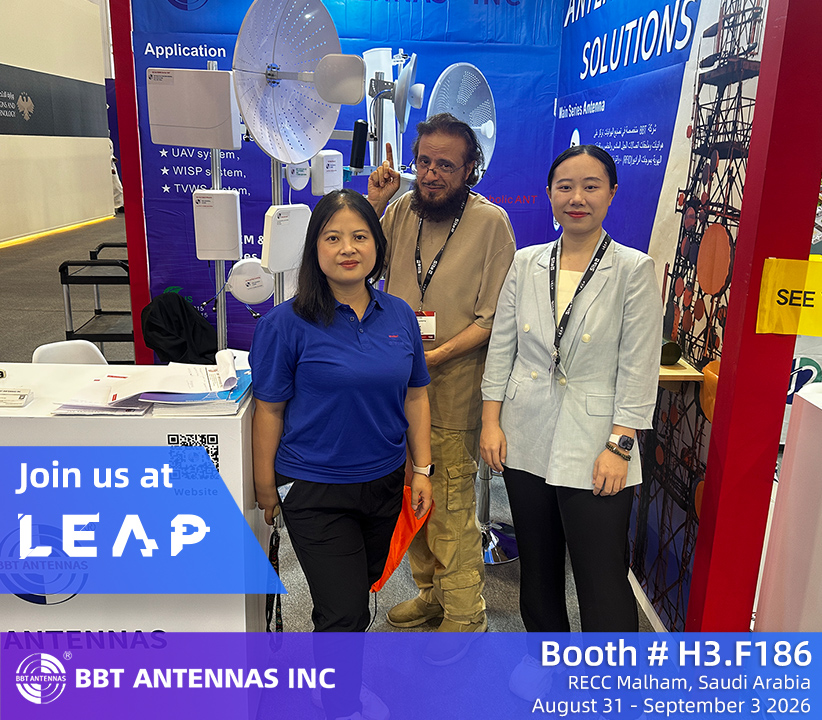
BBT ANTENNAS joined LEAP 2026 in Riyadh, Saudi Arabia, showcasing 5G, WiFi, RFID, and DAS antenna lines alongside OEM/ODM manufacturing services. This post-show recap covers the antenna categories, custom design capabilities, and quality systems behind our products.

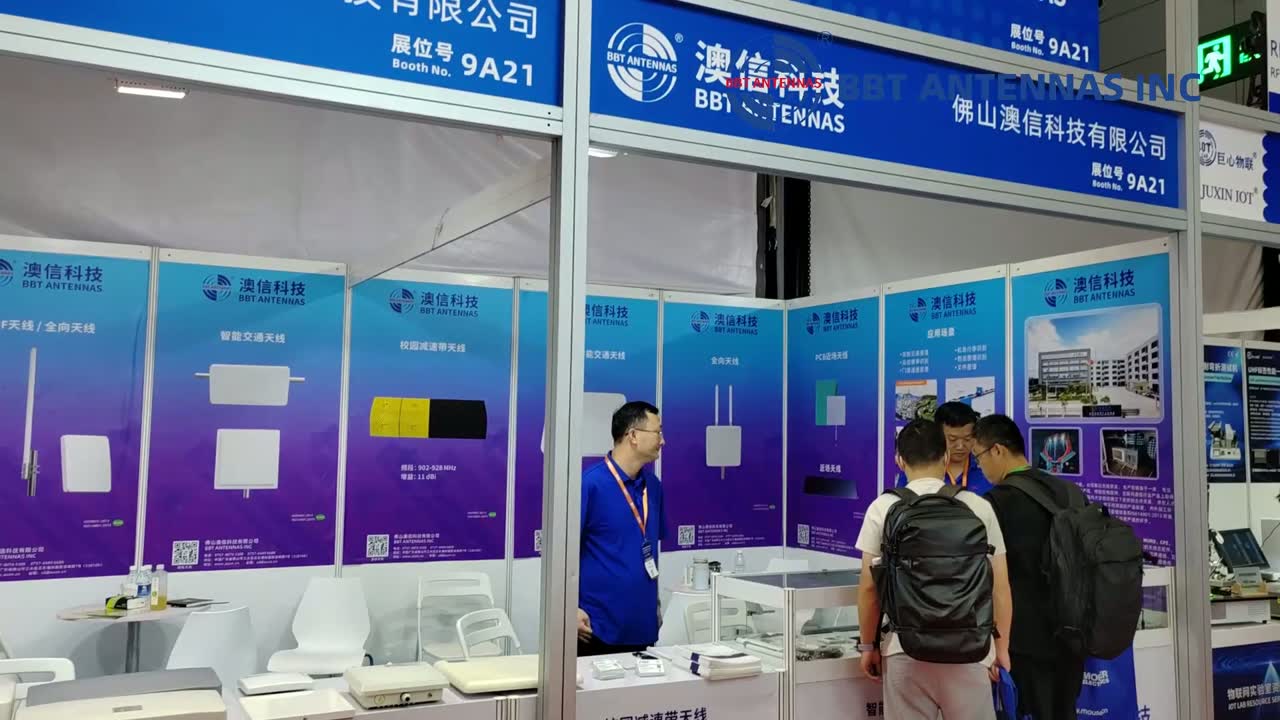
At IOTE 2026 Shenzhen, BBT ANTENNAS met IoT brands, device makers and RF engineers at booth 9A21 to discuss antenna selection, custom development, OEM programs and the full path from project requirements to private-label production.

Selecting the right drone antenna directly affects communication range, data throughput, and mission reliability. For commercial and industrial UAV systems, the choice involves matching frequency bands (2.4 GHz, 5.8 GHz, or dual-band), antenna type, gain, and environmental requirements to your specific project. BBT ANTENNAS supplies standard omni antennas and custom OEM/ODM solutions for UAV communication applications.

Low-PIM or standard DAS antenna? Multi-carrier, high-power, high-density 4G/5G DAS projects typically require antennas with verified low-PIM ratings. Single-carrier, lower-power indoor coverage can often use standard DAS antennas without PIM-related issues. This guide helps you assess your project conditions, compare PIM test data correctly, and build an RFQ that manufacturers can act on immediately.

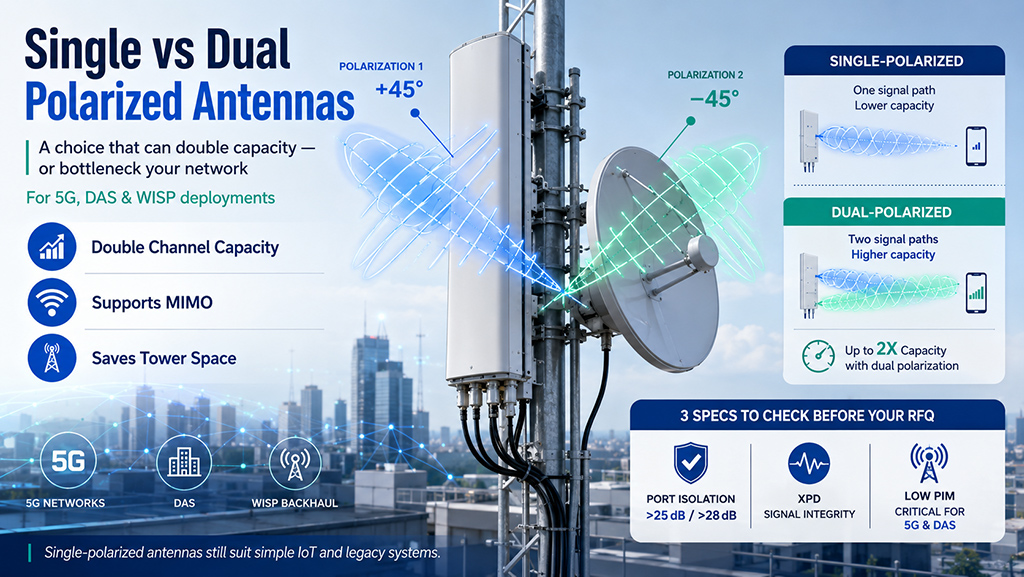
A dual-polarized antenna transmits and receives wireless signals on two orthogonal planes simultaneously, typically using ±45° slant or vertical and horizontal (V/H) alignment. This design doubles channel capacity, reduces multipath fading, and supports MIMO applications without increasing the physical footprint of the installation.

When sourcing antennas for a DAS, IoT, or telecom project, misinterpreting the datasheet can lead to costly deployment failures. Many buyers look at a specification sheet, see a high number next to the antenna gain, and immediately assume the product will deliver a strong signal over long distances. However, in RF engineering, theoretical gain is only one part of the equation.

BBT ANTENNAS uses a microwave anechoic chamber to evaluate how an antenna behaves before a custom design is approved. The controlled environment reduces reflections and outside RF interference, giving engineers a cleaner view of gain, radiation pattern, efficiency, polarization and beamwidth. VSWR and return loss are checked with a vector network analyzer as part of the same antenna testing workflow.

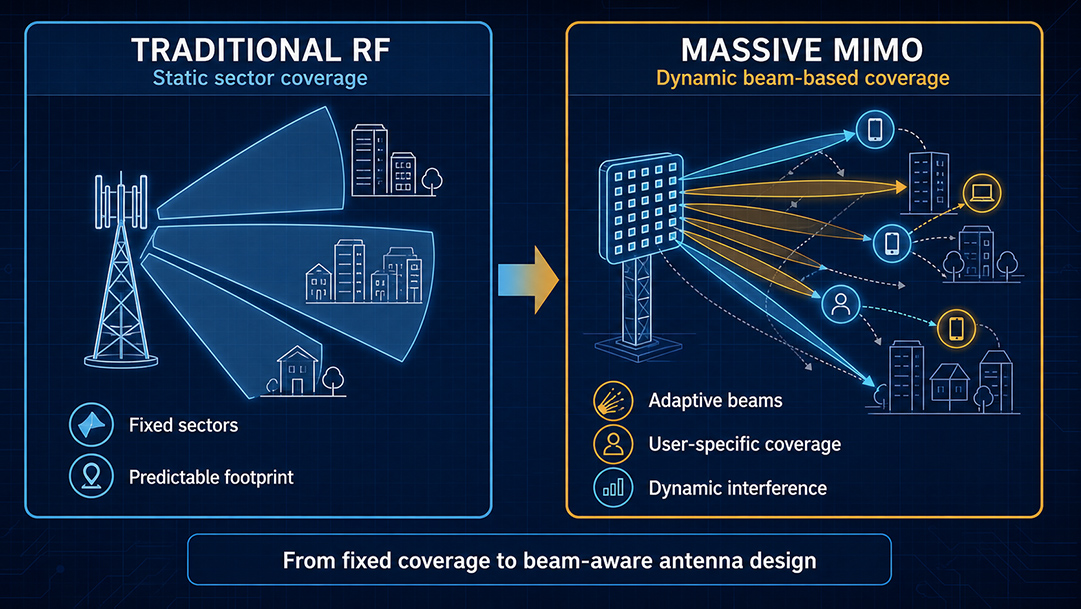
For buyers, 5G MIMO antenna design starts with practical RF details: the operating band, port count, polarization, beamwidth, radiation pattern, isolation, connector, and mounting environment. These choices affect whether a 5G, DAS, sector, or private wireless project gets the right RF hardware for its site conditions.