
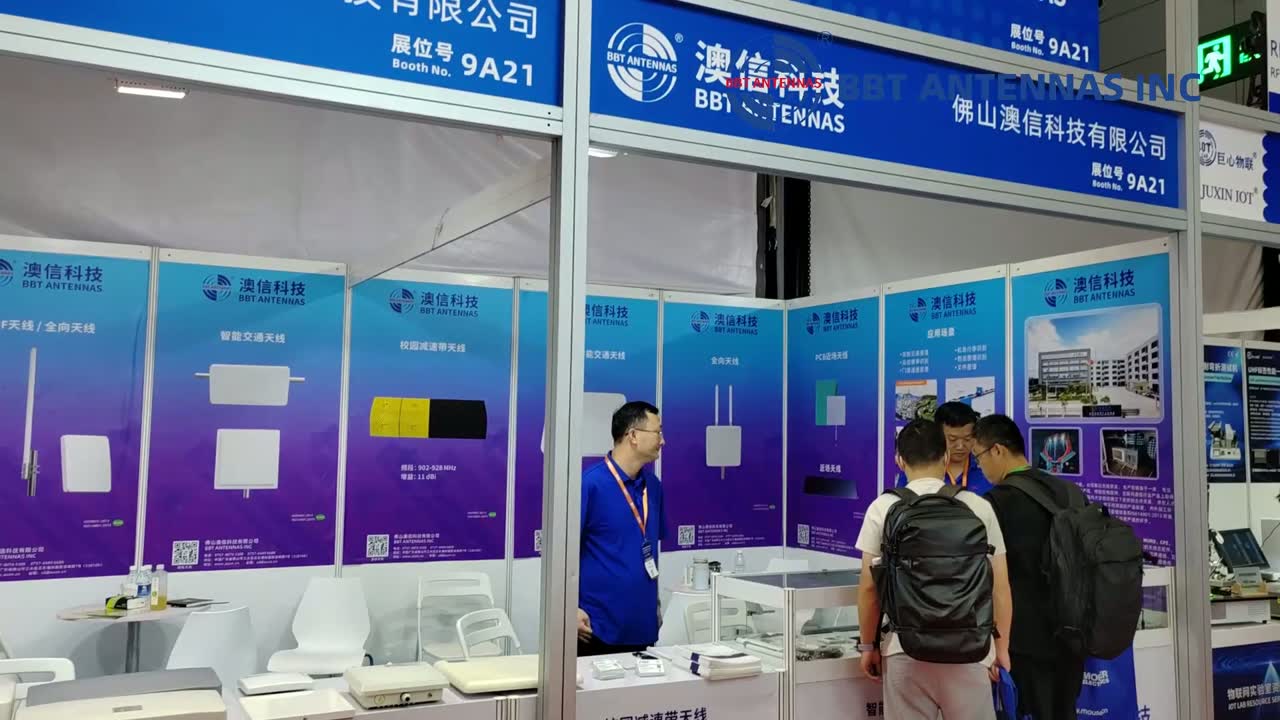
At IOTE 2026 Shenzhen (August 26–28, Shenzhen World Exhibition & Convention Center), BBT ANTENNAS displayed RFID, 5G, WiFi, LoRa and DAS antennas at booth 9A21 and worked with IoT brands, device makers, system integrators and RF engineers to match antenna selection to each project's application, device and performance requirements.
What Application, Device and Performance Details Drive Antenna Selection?
The most common conversation at booth 9A21 started with a single question: "I have a specific application. What antenna do I need?"
Before recommending any product, BBT ANTENNAS engineers walk through a checklist with every buyer. What is the target application? How will the antenna integrate with the device or enclosure? Which frequency band does the system use? What read range or coverage zone is required? What gain, VSWR, beam width and polarization targets apply? Where will it be installed, indoors or outdoors? What connector type fits the reader or radio? How many units per order, and does the project need private-label branding?
Take RFID as one example from the show. A warehouse shelf project, an access-control gate, a vehicle identification checkpoint and a retail checkout counter each call for a different antenna type. Panel antennas handle long-range, wide-coverage reading. Near-field antennas control the read zone to as little as 0 to 600 mm for precision item-level identification. PCB antennas fit inside compact devices. Omni-directional antennas cover full 360-degree zones. Getting the right match starts with getting the application details on the table first. Explore the full RFID antenna range to see how form factor, gain and polarization vary by use case.
How Do RFID, 5G, WiFi, LoRa and DAS Requirements Shape Antenna Design?
Booth 9A21 displayed antenna products across multiple wireless technologies in one space, and that lineup was intentional. Each protocol places different demands on antenna design.
RFID antennas are selected by read range, polarization (circular or linear) and mounting position: ceiling, wall, gate or embedded. 5G and LTE base station antennas focus on sector coverage, MIMO configuration and tower or pole mounting. WiFi antennas address indoor multi-band coverage and DAS integration. LoRa and NB-IoT antennas prioritize long-range outdoor connectivity with low power. DAS antennas distribute cellular and WiFi signals across large indoor areas like airports, shopping centers and stadiums.
BBT ANTENNAS manufactures across all of these product lines, including 5G and base station antennas, WiFi and WiMAX antennas, RFID antennas, LoRa/IoT antennas and DAS antennas. For buyers running projects that span multiple wireless technologies, working with a single manufacturer that covers the full spectrum removes the coordination overhead of managing separate suppliers for each antenna type.
Standard Antenna or Custom Development?
One question came up repeatedly at the show: "Do I need a custom antenna, or will a standard product work?"
When the required frequency band, gain, connector and mounting method match an existing product in the catalog, a standard antenna is the fastest and most cost-effective path. BBT ANTENNAS carries UHF panel antennas for both 902–928 MHz (FCC region) and 860–868 MHz (EU), near-field antennas, PCB antennas and intelligent transportation antennas as ready-to-ship options.
Custom development becomes the better choice when the project involves a non-standard frequency (such as the 840–845 MHz band used in certain transportation systems), tight mechanical constraints that require a specific form factor, private-label branding and packaging, antenna-in-device integration, a controlled read zone that no standard model delivers, or multi-band operation in a single housing.
The practical approach: start with the standard catalog, run an engineering evaluation with the BBT team, and move to custom antenna development only when the project parameters demand it. Many buyers at IOTE began with a standard product discussion and shifted to a custom design once their specific installation constraints became clear.
R&D, Testing and Quality Control Behind Custom Antennas
Choosing a custom antenna manufacturer means trusting that supplier to carry the project from concept through production without compromising performance. Here is what to compare.
Engineering team depth. BBT ANTENNAS employs RF engineers, microwave technology engineers, simulation design engineers, structural engineers, trial engineers, commissioning engineers and quality control engineers. This coverage means every stage of antenna development, from electromagnetic simulation through mechanical design to production-line commissioning, stays under one roof.
Testing equipment. The in-house test lab includes a network analyzer, a third-order intermodulation tester, a constant temperature and humidity tester, a thermal shock tester, a UV aging test chamber, a rain test chamber, a salt spray tester, a single arm drop tester and a RoHS tester. These instruments validate RF performance, environmental durability and regulatory compliance before any antenna ships.
Four-stage quality control. Raw material inspection, in-process quality checks, final product testing and shipping verification form a continuous QC chain. BBT ANTENNAS holds ISO 9001:2015 and ISO 14001:2015 certifications, operates a 30,000 m² R&D and production facility, and employs more than 200 staff.
For a closer look at production capabilities, visit the manufacturing page.
From Requirements to Samples, Private-Label Production and RFQ
Whether the conversation started at booth 9A21 or begins online, the path from project idea to finished antenna follows the same sequence.
1. Submit project requirements. Application, device, frequency, read or coverage zone, performance targets, installation environment, connector, quantity, and any branding or packaging needs.
2. Engineering evaluation. BBT engineers review the inputs and recommend a standard antenna or propose a custom design with preliminary specifications.
3. Sample production. Prototypes or selected standard units ship for buyer-side testing and validation.
4. Production and private-label fulfillment. After sample approval, the order enters full manufacturing. BBT ANTENNAS supports OEM and ODM programs with private-label branding, IP protection and non-compete commitments so brand owners can sell under their own name with full confidence.
5. Quality verification and shipment. Every batch passes four-stage QC before leaving the facility.
6. RFQ and pricing. Contact the BBT ANTENNAS team with your project details to receive a formal quotation.
Frequently Asked Questions
What frequency bands do BBT ANTENNAS RFID antennas cover?
BBT ANTENNAS manufactures UHF RFID antennas for the 902–928 MHz band (FCC/Americas region) and the 860–868 MHz band (EU region). Intelligent transportation antennas are also available for the 840–845 MHz and 920–925 MHz standards used in electronic license plate and access-control systems.
Can BBT ANTENNAS provide private-label or OEM-branded antennas?
Yes. BBT ANTENNAS runs OEM and ODM programs that include private-label branding, custom packaging and product personalization. IP protection and non-compete agreements are part of the standard partnership terms, giving brand owners full control over how their products reach the market.
What types of RFID antennas does BBT ANTENNAS manufacture?
The RFID product line includes UHF panel antennas, near-field antennas with controllable read distances from 0 to 600 mm, UHF PCB antennas for embedded applications, intelligent transportation antennas, omni-directional antennas and fully customized RFID antennas designed to match specific project requirements.
How does BBT ANTENNAS test antenna quality before shipping?
Every antenna goes through a four-stage quality control process: raw material inspection, in-process monitoring, final product testing and shipping verification. The test lab includes a network analyzer, a third-order intermodulation tester, environmental chambers (temperature, humidity, thermal shock, UV, rain, salt spray), a drop tester and a RoHS compliance tester. BBT holds ISO 9001:2015 and ISO 14001:2015 certifications.
How do I start a custom antenna project with BBT ANTENNAS?
Submit your project details including the target application, device, frequency band, coverage requirements, installation environment, connector type, quantity and any branding needs. The BBT engineering team will evaluate your inputs, recommend a standard or custom solution, and provide samples for your testing. After approval, the project moves into full production with four-stage QC. Contact the team to request a quotation.