A buyer's guide to outdoor WiFi antennas for project-scale coverage: which omni, sector, panel and dish antennas suit campuses, parks, stadiums, resorts, ports and remote sites, what to specify in an RFQ, and how to source standard or OEM/ODM models from BBT ANTENNAS.

A buyer's guide to indoor DAS antennas for in-building 4G/5G projects: which ceiling, wall-mount and log-periodic antennas suit offices, malls, airports, hotels, car parks and factories, what to specify in an RFQ, and how to source standard or OEM/ODM models from BBT ANTENNAS.

Discover high-performance RFID antennas for public transportation and vehicle identification. BBT ANTENNAS provides reliable manufacturing and custom OEM/ODM solutions to meet your intelligent transport system requirements.

Three BBT ANTENNAS UHF RFID panel antenna models compared for security, access control, vehicle gate, and personnel tracking deployments. Covers frequency, polarization, gain, beam width, and environmental selection criteria, with OEM and custom manufacturing options for project buyers.

A practical selection guide for RF engineers and procurement teams choosing omni, sector, or custom base station antennas for 5G/4G cellular infrastructure, private networks, and industrial communication deployments.
A selection and sourcing guide to point-to-point antennas for wireless bridges and backhaul: how a building-to-building link works, when to choose dish, grid or panel antennas, what to check for gain, polarization and alignment, and how to source standard or OEM/ODM models from BBT ANTENNAS.

Why is airport 5G coverage so difficult? Modern airports are challenging RF environments due to massive passenger density, complex metal architectures, and severe interference risks. Reliable airport 5G coverage requires specialized antenna systems with ultra-low passive intermodulation (PIM) ratings for indoor terminals and precise pattern control for outdoor airfield sectors.

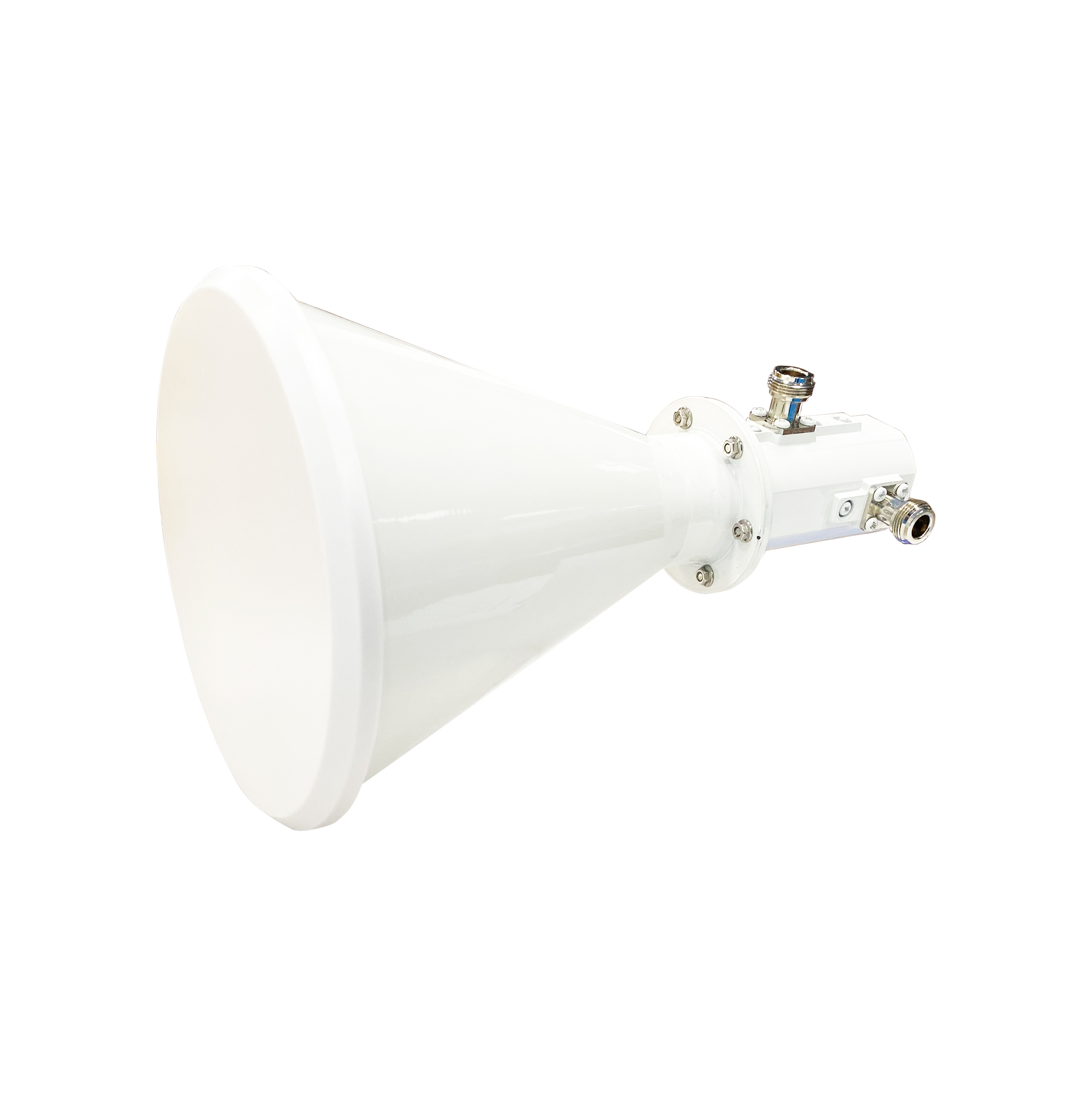
Scaling Your WISP Network: When to Choose 20° vs. 30° Horn Antennas
As Wireless Internet Service Providers (WISPs) grow, they inevitably face a "density wall." Adding more subscribers to a single tower using traditional 90° or 120° sector panels often leads to self-interference and spectrum exhaustion. The solution lies in network densification using precise, Narrow angle horn antenna technology.
But how do you choose the right beamwidth? For most high-performance Point to multipoint antenna deployments, the choice comes down to 20° versus 30° models. As a professional China antenna manufacturer, BBT Antennas breaks down the technical differences to help you optimize your deployment.