
Outdoor WiFi antennas connect to access points and bridges to cover campuses, parks, venues and industrial yards. Omni antennas cover 360° around a pole, sector antennas cover a wide arc, panel antennas serve narrow zones and client links, and dish or grid antennas link buildings. BBT ANTENNAS supplies the full range across 2.4, 5 and 6 GHz, with OEM/ODM customization.
Last updated: October 2026What Outdoor WiFi Antennas Solve on a Project Site
Outdoor WiFi antennas deliver strong, wide-area wireless connectivity in open spaces such as parks, stadiums, campuses and remote areas. They give each access point the reach and coverage pattern the site needs, so a single radio can serve a whole plaza, sports field or car park. Built to withstand rain, wind, sun, heat and cold, they keep internet access reliable for visitors, staff and daily operations. In smart cities, the same networks connect IoT devices such as cameras, sensors, kiosks and parking systems.
This guide is for system integrators, WiFi contractors, wireless ISPs and campus or facility teams who plan site-wide networks. It does not cover home routers or range extenders. Below you will find which antenna type suits each site, how the main types compare and what to put in your RFQ.
Choosing Outdoor WiFi Antennas by Site
Every outdoor site brings its own coverage problem. Match the site to an antenna type first, then refine the bands, gain and port count. Typical choices for project-scale outdoor WiFi coverage:
| Site | Coverage challenge | Recommended antenna type | BBT product |
|---|---|---|---|
| University and corporate campuses | Quads, walkways, sports fields and car parks between buildings, with users moving from one building to the next | Dual-band MIMO omni antennas on light poles in open areas, sector antennas on rooftops facing lawns and fields | Dual-band MIMO omni antenna (BBT-Q2458M0810-N6) |
| Parks, plazas and smart city streets | Wide public areas served from street poles, carrying phones as well as IoT devices such as cameras, sensors and kiosks | Omni antennas on street and light poles, with higher-gain omni models where poles stand far apart | Outdoor omni antennas |
| Stadiums and event venues | Thousands of devices packed into the stands, so coverage must be split into many small, controlled cells | Narrow-beam horn or sector antennas aimed at seating sections from roof edges and catwalks, mainly on 5 and 6 GHz | Horn antennas, 4900–7125 MHz |
| Hotels, resorts and campgrounds | Pools, gardens, beaches and scattered villas or pitches, where equipment should stay discreet | Compact dual-band panel antennas on building walls aimed at pools and gardens, omni antennas on poles for central lawns and campsites | Dual-band dual-pol panel antenna (BBT-2458PA1214D060) |
| Ports, logistics yards and factory grounds | Container stacks, steel structures and salt air, with handheld scanners and vehicle terminals that need steady coverage on the move | High-gain sector antennas on light masts aimed along container rows and loading areas | Dual-band MIMO sector antenna (BBT-2458PA1719R065-N4) |
| Remote and rural sites | Long distances, few mounting points and no wired backhaul nearby | High-gain omni antennas for wide-area coverage, sector or horn antennas for point-to-multipoint access | High-gain omni antenna (BBT-2458FG1215V) Further reading: WISP networks |
| Links between buildings | No fiber between buildings or out to remote access point masts | Dish, grid or high-gain panel antennas installed in point-to-point pairs | Dish antennas, 2400–6400 MHz Further reading: point-to-point links |
Most sites combine types. A university campus, for example, may run omni antennas on light poles along its walkways, sector antennas on rooftops facing the sports fields and a dish link out to a remote car park.
Explore BBT Outdoor WiFi Antennas
The three coverage roles in the table map to these dual-band 2.4/5 GHz MIMO models: an omni antenna for the center of an open area, a sector antenna for wide zones covered from the edge, and a compact panel for narrow zones and client links.
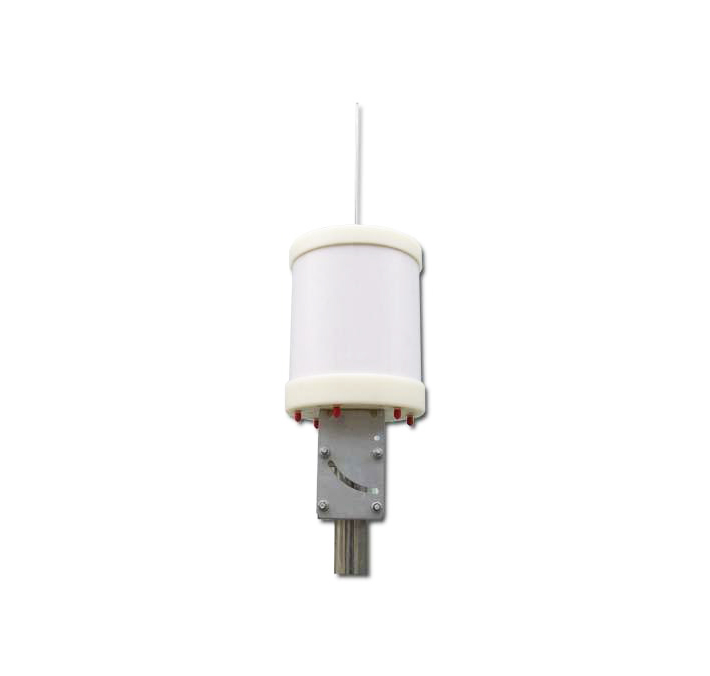
Dual-Band MIMO Omni Antenna
BBT-Q2458M0810-N6
2400–2500 / 5150–5850 MHz
8 / 10 dBi · 360° omni · Vertical
VSWR ≤ 1.5 · 6 × SMA-Female
Φ160 × 405 mm · DC grounded · -40 to +60 °C
View Detail
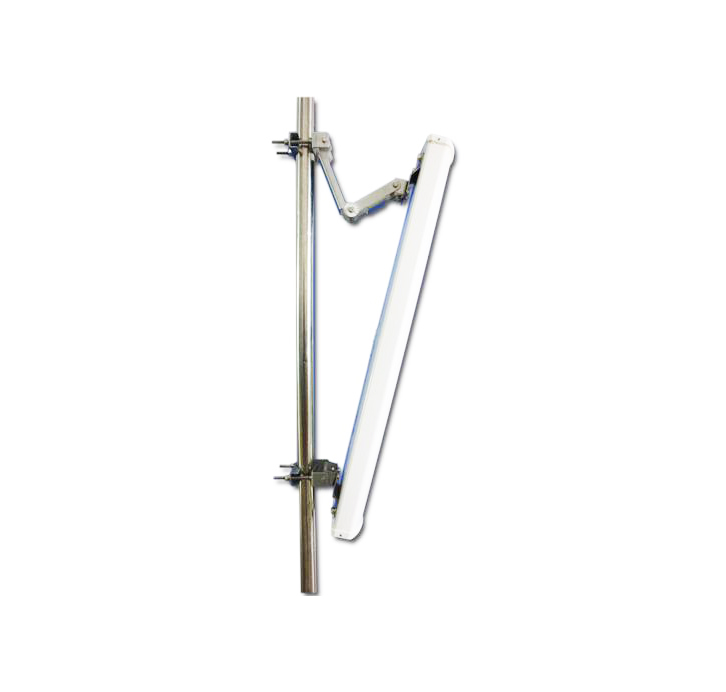
Dual-Band MIMO Sector Antenna
BBT-2458PA1719R065-N4
2400–2500 / 5150–5850 MHz
17 / 19 dBi · 65° H-beam · F/B ≥ 23 dB
VSWR ≤ 1.7 · 4 × N-Female
870 × 280 × 80 mm
View Detail
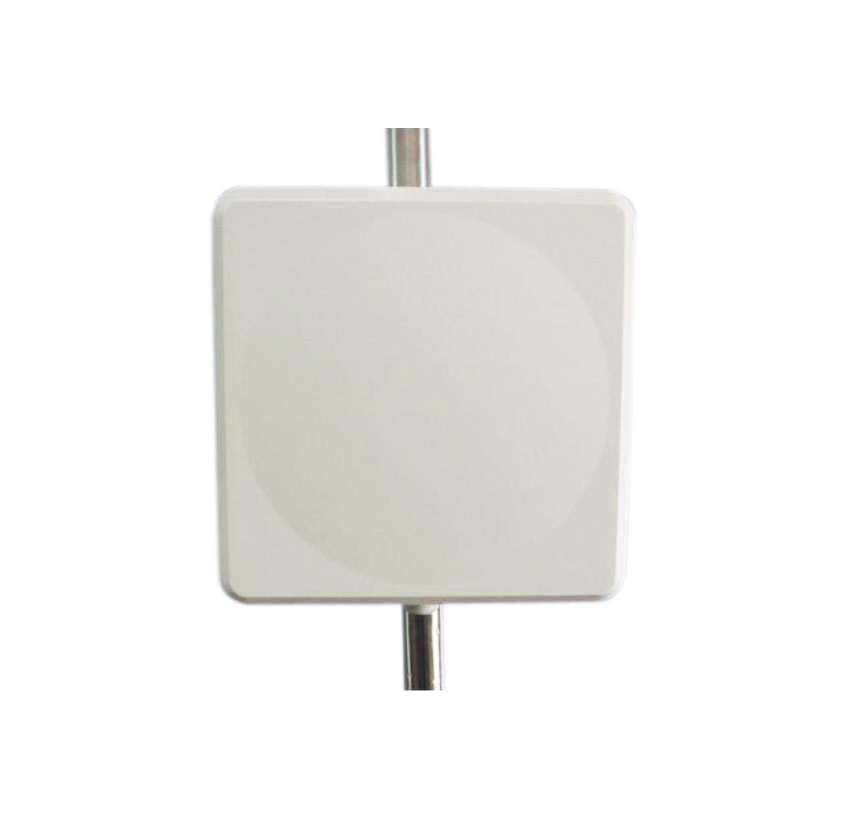
Dual-Band Dual-Pol Panel Antenna
BBT-2458PA1214D060
2400–2500 / 5150–5850 MHz
12 / 14 dBi · ±45° · 65° / 60° H-beam
F/B ≥ 25 dB · VSWR ≤ 1.5
4 × IPEX · 270 × 270 × 80 mm
View Detail
Need more reach or the 6 GHz band? Compare the high-gain Omni Fibreglass Antenna (BBT-2458FG1215V, 12 / 15 dBi), the 5G 6G & WiFi 7 Horn Antenna (BBT-4971HO19HV, 4900–7125 MHz, 17.5–19 dBi) and the long-range Dual-pol Dish Antenna (BBT-5159PM34D12-N2, 34 dBi), or browse the omni, MIMO sector, panel, CPE, horn and dish ranges.
Omni, Sector, Panel or Dish: Which Outdoor WiFi Antenna Fits?
The right choice depends on where you can mount the antenna, the shape of the area, the distance to users and the capacity each zone needs. For the trade-offs between the two basic families, read omni vs directional antennas in real projects.
Omni
360° around a pole or mast. Plazas, parks, campsites, campus walkways.
Sector
Wide 65° arc from the site edge, 15–20 dBi. Sports fields, stands, yards.
Panel
Defined zone in front of a wall or pole, 12–26 dBi. Pool decks, loading bays, client links.
Dish and grid
Tight beam between two fixed points, up to 34 dBi. Building-to-building links.
Omni Antennas for Open Areas Around a Pole
An omni antenna radiates 360° in the horizontal plane, so it works best in the middle of the area it serves, such as a light pole in a plaza or a mast in a campsite. Gain shapes the vertical beam. BBT's dual-band MIMO omni (BBT-Q2458M0810-N6) combines 8 / 10 dBi with a 16° / 10.5° vertical beam, a good fit for poles close to users, and ships with pole-mount hardware. The high-gain BBT-2458FG1215V narrows to 7° / 5° at 12 / 15 dBi for wide, flat areas where users are farther from the pole. Browse the full outdoor omni antenna range.
Sector Antennas for Wide Zones Covered from the Edge
A sector antenna focuses its energy into a wide horizontal arc, so it can sit on a rooftop or mast at the edge of a site and cover the lawn, yard or stand in front of it. BBT's dual-band MIMO sector (BBT-2458PA1719R065-N4) delivers 17 / 19 dBi with a 65° horizontal beam and a front-to-back ratio of at least 23 dB, and its pole bracket allows mechanical downtilt to put the beam on the user area. Several sectors on one mast build full-circle coverage with more capacity than a single omni can deliver. Our guide to outdoor sector antennas for range and signal strength covers placement in more detail. See all MIMO sector antennas.
Panel Antennas for Narrow Zones and Client Links
A panel antenna mounts flat against a wall or pole and covers a defined zone in front of it, such as a pool deck, a loading bay or a row of parking spaces. The same form factor works on the client side, linking a remote building or kiosk back to the main network. BBT's integration panel (BBT-2458PA1214D060) gives 12 / 14 dBi with ±45° dual polarization, a 65° / 60° horizontal beam and a front-to-back ratio of at least 25 dB, which keeps signal from spilling behind the wall. Its 270 × 270 × 80 mm die-cast housing is built for outdoor AP and CPE equipment, waterproof to IP67, with IPEX connectors for internal connection to the radio. Learn what panel antennas are used for, or browse BBT panel and CPE antennas.
Dish and Grid Antennas for Links Between Buildings
Dish and grid antennas concentrate their energy into a tight beam. They do not cover users. Instead, they carry traffic between two fixed points, such as from the main building to a remote AP mast, a gatehouse or a second campus. BBT's dual-pol dish (BBT-5159PM34D12-N2) reaches 34 dBi with a 3° beam on 5100–5950 MHz, and its anti-UV, anti-aging coating gives strong resistance to corrosion and wind. Our comparison of horn vs dish antennas explains when each one fits, and the point-to-point transmission page covers bridge links. Browse BBT dish antennas.
How the four types compare across the BBT outdoor WiFi range:
| Antenna type | Coverage shape | BBT gain range | Typical mounting | Best sites |
|---|---|---|---|---|
| Omni | 360° horizontal | 5–15 dBi | Light pole, mast or rooftop at the center of the area | Plazas, parks, campsites, campus walkways |
| Sector | Wide arc in front of the antenna | 15–20 dBi | Rooftop or mast at the site edge, with downtilt | Sports fields, stands, yards, large lawns |
| Panel | Defined zone in front of the antenna | 12–26 dBi | Building wall or pole | Pool decks, loading bays, parking rows, client links |
| Dish / grid | Narrow beam aimed at one far-end point | Dish 17–34 dBi, grid 15–29 dBi | Pole or mast, aligned with the antenna at the other end | Links between buildings and to remote AP masts |
Bands and Specifications to Include in Your Outdoor WiFi RFQ
A complete RFQ gets you an accurate quote without a second round of questions. Cover these points for each antenna position in the design:
- Frequency bands: 2.4 GHz (2400–2500 MHz) for range and older clients, 5 GHz (5150–5850 MHz) for capacity, and the 6 GHz band for WiFi 6E and WiFi 7. BBT horn antennas cover 4900–7125 MHz in one unit, and our WiFi 7 antenna guide explains what the 6 GHz band changes.
- Gain and beamwidth: state both horizontal and vertical beamwidth, not gain alone. Higher gain narrows the vertical beam, which affects mounting height and downtilt.
- MIMO port count: match the antenna to the radio chains of your AP. A 2×2 dual-band AP needs two ports per band, and a 4×4 radio needs four. The BBT-Q2458M0810-N6 provides three ports per band for 3×3 radios.
- Polarization: vertical on the omni models on this page, ±45° dual-slant on dual-pol panels and dishes such as the BBT-2458PA1214D060 and BBT-5159PM34D12-N2. Confirm what your AP or bridge radio expects.
- Connectors: N-Female for mast-mounted antennas fed by jumper cables, SMA on compact multi-port units such as the 6-port MIMO omni, and IPEX inside integration panels. Confirm gender and quantity.
- VSWR: set a limit for each band. The three featured models specify ≤1.5 to ≤1.7.
- Mounting and wind load: pole diameter, bracket type and downtilt needs. The BBT models on this page fit Φ30–60 mm poles and carry a 60 m/s rated wind velocity.
- Environment and protection: operating temperature (-40 °C to +60 °C on the BBT models on this page), DC-grounded lightning protection and a radome color that suits the site.
Ready to price a project? Send your frequency bands, AP model or port count, site type and quantities. BBT ANTENNAS will match suitable models, quote by project and arrange samples for evaluation.
Send Your WiFi Antenna RequirementsGetting the Network to the Site: Bridges, Backhaul and WISP
Coverage antennas only help if the access points have a connection behind them. Where fiber does not reach a remote AP mast, a gatehouse or a second building, a point-to-point wireless bridge carries the traffic over dish, grid or high-gain panel antennas installed in aligned pairs. For long links, start with the 34 dBi Dual-pol Dish Antenna (BBT-5159PM34D12-N2). See the full dish antenna range and our point-to-point directional transmission page for link planning.
Wireless ISPs that serve homes and businesses around a town or rural area need point-to-multipoint access instead. Sector and horn antennas at the base site cover the surrounding subscribers, who connect through CPE antennas. Start with our WISP applications page, browse horn antennas, and read the guide to deploying 20° and 30° horn antennas.
Why Integrators and Antenna Brands Source from BBT ANTENNAS
BBT ANTENNAS designs and manufactures outdoor WiFi antennas in its own factory in Foshan, China, and supplies system integrators, WiFi contractors, wireless ISPs and overseas antenna brands.
- A complete outdoor WiFi line: 74 WiFi and WiMAX models across omni, sector, panel, horn, grid and dish types, spanning 2400–7125 MHz, including MIMO versions with 2, 3, 4 and 6 ports.
- Built for outdoor duty: DC-grounded lightning protection, 60 m/s rated wind velocity and a -40 °C to +60 °C operating range on the models featured here.
- Weather and reliability testing: rain, salt-spray, UV-aging, thermal-shock and constant temperature-humidity chambers, plus network analyzers for RF verification.
- More than 30 years in antennas: BBT's history begins in 1991, with overseas marketing since 1998.
- Scale and engineering depth: more than 200 staff, including RF, microwave, simulation and structural engineers, and a 30,000 m² IoT Industrial Park workshop for R&D and production.
- Certified quality systems: ISO 9001:2015 and ISO 14001:2015, plus independent intellectual property and product patents.
- Four-stage quality control: raw material, in-process, final and pre-shipment inspection.
- OEM/ODM for your brand: custom frequency bands, gain, port count, connectors, radome color, private-label branding and packaging.
Planning your own outdoor WiFi antenna line? See how BBT works with brands and distributors on the Custom & OEM antenna manufacturing page.
Outdoor WiFi Antenna FAQ
Should I use omni or sector antennas for outdoor WiFi?
Use omni antennas when the access point can sit in the middle of the area it serves, such as a light pole in a plaza or a mast in a campsite. Use sector antennas when the antenna has to sit at the edge of the site, on a rooftop or mast, and cover the area in front of it, or when a zone needs more capacity than one omni can carry. Many campus and venue networks combine both, with panel antennas for smaller zones.
Should an outdoor WiFi network use 2.4 GHz, 5 GHz or 6 GHz?
Most outdoor networks run 2.4 GHz and 5 GHz together. 2.4 GHz travels farther and reaches older devices, while 5 GHz carries far more capacity. The 6 GHz band used by WiFi 6E and WiFi 7 adds wide, clean channels for high-density sites such as stadiums, where local rules allow outdoor use. BBT ANTENNAS offers dual-band 2.4/5 GHz MIMO antennas and horn antennas covering 4900–7125 MHz.
Is a higher-gain outdoor WiFi antenna always better?
No. Higher gain pushes the signal farther toward the horizon by narrowing the vertical beam, so a high-gain omni on a tall pole can overshoot users standing close below it. BBT's 8 / 10 dBi MIMO omni has a 16° / 10.5° vertical beam, while the 12 / 15 dBi model narrows to 7° / 5°. Match gain to mounting height and distance, and use downtilt on sector and panel antennas to aim the beam at the user area.
How many access points and antennas does an outdoor site need?
It depends on the size of the area, obstacles such as buildings, trees and containers, the number of devices and the throughput each user needs. WiFi designers set the number and position of access points from a site survey and a coverage model, so there is no fixed count per square meter. Send your site plan and user estimates to BBT ANTENNAS, and our engineers will recommend suitable antenna types and gains for your design.
Can outdoor WiFi antennas handle rain, wind, lightning and extreme temperatures?
Yes. BBT outdoor WiFi antennas are built for year-round exposure. The models on this page are DC grounded for lightning protection, rated for 60 m/s wind and specified for -40 °C to +60 °C operation, with PVC radomes or aluminium alloy bodies. The BBT-2458PA1214D060 integration panel is waterproof to IP67. BBT verifies durability in its own rain, salt-spray, UV-aging and thermal-shock test chambers.
Can BBT ANTENNAS build outdoor WiFi antennas under our brand?
Yes. BBT ANTENNAS provides OEM and ODM manufacturing for antenna brands, distributors and integrators. We can adjust frequency bands, gain, port count, connector type, radome color and mounting brackets, and apply your logo and packaging. Pricing is quoted per project, and samples are available for evaluation before volume orders.
Planning outdoor WiFi coverage for a campus, venue or industrial site? Send your site type, bands, AP model and quantities. BBT ANTENNAS will recommend the right antennas and quote by project.
Request an Outdoor WiFi Antenna QuoteBuilding your own antenna line? Explore OEM/ODM manufacturing