
Outdoor sector antennas are widely used in cellular, WISP, private wireless, and broadband systems because they focus coverage into a planned sector instead of spreading signal equally in every direction. This helps improve range, capacity, and interference control when the network is designed around real coverage zones.
Quick answer: A sector antenna is a directional antenna that covers a defined horizontal area, commonly 60, 90, or 120 degrees. It is used in cellular base stations, WISPs, private networks, and outdoor wireless systems where one antenna must cover a sector of users with better range and interference control than an omni antenna.
How to Choose a Sector Antenna
| Choice | Use when | What to check |
|---|---|---|
| 65-degree sector | You need a narrower, more focused cell or higher frequency reuse. | Site layout, beam alignment, downtilt and neighboring-sector interference. |
| 90-degree sector | You need a balanced sector for common cellular, WISP or private-network layouts. | Horizontal beamwidth, gain, MIMO ports, polarization and mounting height. |
| 120-degree sector | You want broader sector coverage with fewer antennas per site. | Coverage edge performance, capacity requirements and interference control. |
| Panel antenna | You need focused coverage for a smaller zone, corridor, building face or fixed area. | Pattern, gain, installation distance and whether sector coverage is too wide. |
| Omni antenna | You need broad 360-degree horizontal coverage from one point. | Expected range, user distribution and whether interference will become a problem. |
Understanding Outdoor Sector Antennas
Outdoor sector antennas, also known as directional antennas, are engineered to focus radio frequency signals in targeted areas. Unlike omnidirectional antennas that radiate in all directions, sector antennas concentrate energy within a specific sector, typically ranging from 60 to 120 degrees.
This directional capability helps enhance coverage, improve signal strength, and reduce interference in the designated area. It is especially useful when a wireless network needs planned coverage rather than broad uncontrolled radiation.
Design and Components
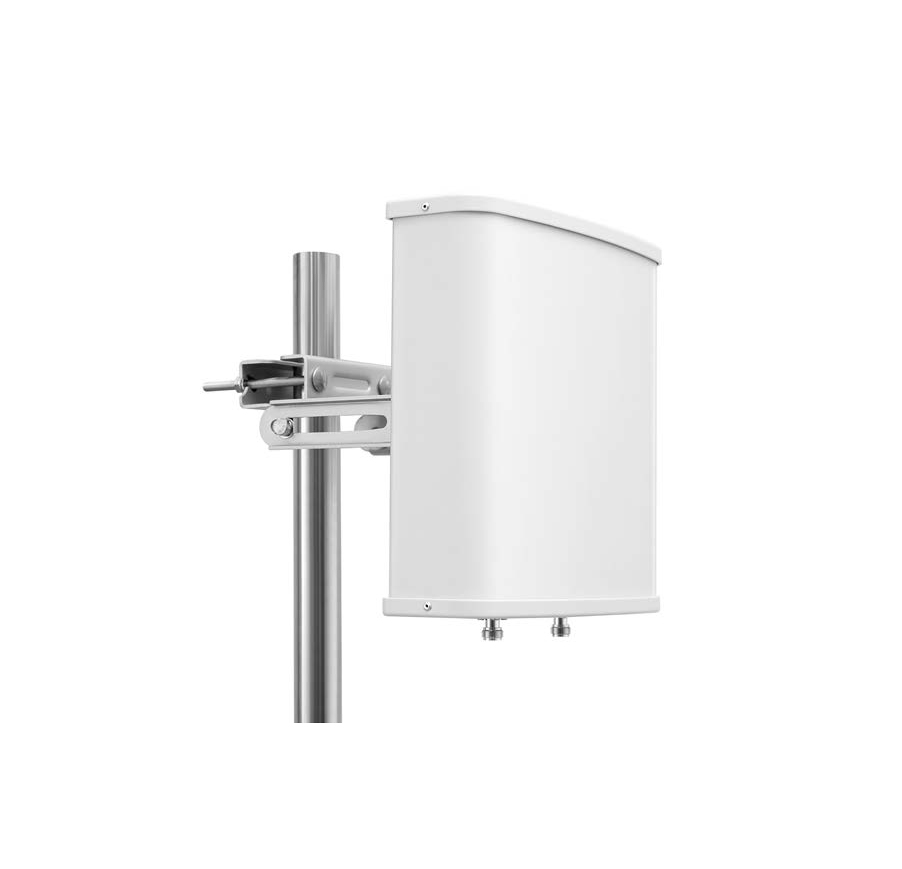
Outdoor sector antennas are built to withstand harsh environmental conditions and usually use rugged, weather-resistant housings. They often include multiple antenna elements arranged in a configuration that produces the desired directional coverage.
Two important electrical characteristics are gain and beamwidth. Gain describes how effectively the antenna focuses RF energy in a chosen direction, while beamwidth defines the horizontal and vertical angle of coverage. These two values determine how far and how wide the antenna can serve a planned area.
Benefits of Using Outdoor Sector Antennas
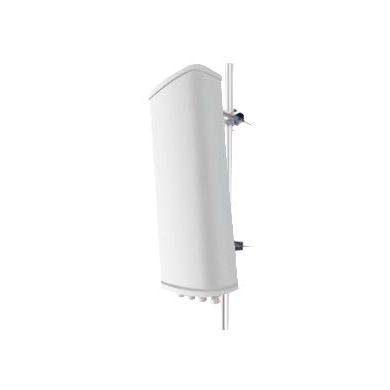
The strategic deployment of outdoor sector antennas can improve wireless network coverage, signal stability, capacity, and frequency planning. These benefits depend on correct antenna selection, mounting, alignment, and site design.
- Extended coverage: By concentrating RF signals in a specific sector, these antennas can extend wireless network range in the intended direction.
- Improved signal strength: Sector antennas can enhance signal quality within their coverage area, supporting more reliable connectivity for users and devices.
- Reduced interference: Focused sector coverage can minimize interference from surrounding areas and improve connection stability in crowded RF environments.
- Increased capacity: Network operators can divide coverage areas into smaller sectors, allowing more users to connect without overloading one broad coverage zone.
- Better spatial reuse: Limiting signal propagation to planned sectors can allow the same frequencies to be reused in nearby sectors with less interference.
Applications of Outdoor Sector Antennas
Outdoor sector antennas are used across many industries where reliable directional wireless coverage is required.
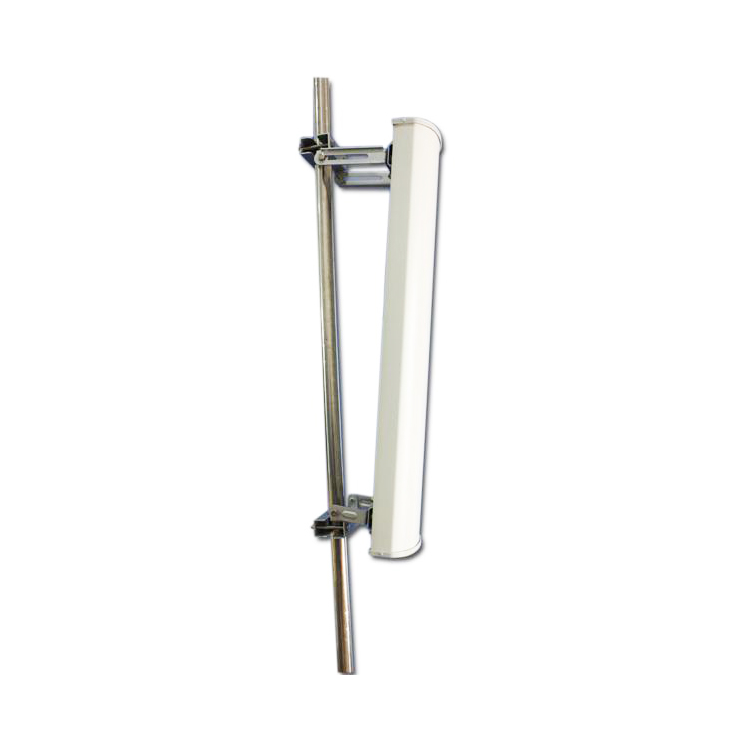
- Telecommunications: Sector antennas are widely used in cellular infrastructure to provide coverage, improve capacity, and enhance signal quality for mobile users.
- Public safety and emergency services: They support radio communication systems used by law enforcement, fire departments, emergency medical services, and disaster-response teams.
- Event venues and public spaces: Stadiums, campuses, venues, and large public areas can use sector antennas to provide reliable wireless coverage for dense groups of users.
- WISP and private wireless: Sector antennas can serve planned outdoor zones for broadband access, private networks, industrial yards, and remote connectivity projects.
Tips for Optimizing Performance
To maximize the range and signal strength of outdoor sector antennas, the antenna must be selected and installed according to the actual coverage plan.
- Choose the right antenna: Select gain and beamwidth according to the coverage area and user distribution.
- Mount and position correctly: Install the antenna with a clear line of sight where possible, then adjust tilt and orientation for the target area.
- Minimize cable loss: Use high-quality low-loss coaxial cable and keep cable runs as short as practical.
- Reduce interference: Keep antennas away from unnecessary RF interference sources and plan adjacent sectors carefully.
- Maintain the installation: Inspect antennas, brackets, connectors, and weatherproofing regularly.
- Use professional installation when needed: Correct placement, alignment, and configuration can have a major impact on performance.
Sector Antenna vs Panel Antenna vs Omni Antenna
Sector, panel, and omni antennas all serve different coverage patterns. A sector antenna is usually chosen for planned outdoor sector coverage. A panel antenna is better for focused directional zones. An omni antenna is better when users surround the antenna and broad 360-degree coverage is needed.
- Use sector antennas when the coverage area can be divided into planned directional sectors.
- Use narrower beamwidths when capacity, frequency reuse, or interference control matters.
- Use wider beamwidths when fewer antennas must cover a larger outdoor area.
- For 4G/5G and WISP projects, check band support, gain, MIMO ports, downtilt, PIM, and mechanical mounting.
BBT Sector Antenna Options
BBT Antennas supports BTS, 5G, sector, MIMO, and outdoor wireless antenna projects. If you are selecting a sector antenna, share the operating band, desired beamwidth, gain target, MIMO port requirements, installation height, downtilt needs, and environmental conditions so BBT can recommend suitable product options.
Build the Right Sector Antenna Shortlist
Band and beamwidth narrow the field, but ports, tilt, mounting, and site conditions decide whether an antenna will work in the finished installation. Start with BBT's 698-6000 MHz sector antenna range to compare available designs.
For cellular and base-station coverage, review the BBT-0638SA1114D065-N2 dual-polarized panel antenna. For a 2.4/5.8 GHz WiFi or WiMAX project, compare the BBT-2458PA1719R065-N4 MIMO sector panel antenna. If the coverage plan still calls for a comparison between sector, omni, RET, or CPE/panel formats, the BTS and 5G base-station antenna range puts those options in one place.
Do not force the site plan around an off-the-shelf antenna. BBT's custom sector antenna and OEM/ODM service can match a different band, beamwidth, MIMO configuration, downtilt, connector, radome, mounting system, private label, or packaging requirement.
Send the working bands, site layout, horizontal and vertical beamwidth, gain target, polarization, port count, tilt requirement, connector, installation height, environmental conditions, quantity, and delivery country. Our team will check the fit and prepare the appropriate product or custom route. Request a sector antenna review and quotation.
Related BBT antenna resources
- BTS 5G antennas
- sector 698-6000MHz antenna
- panel antenna uses
- MIMO sector antennas for next-generation wireless connectivity
FAQ
What is a sector antenna?
A sector antenna is a directional antenna designed to cover a defined sector area instead of radiating equally in every direction. It is widely used in cellular base stations, WISP networks, private wireless systems and outdoor broadband coverage.
Does a sector antenna increase range?
A sector antenna can improve usable range in its intended direction because it concentrates energy into a sector instead of spreading signal in all directions. Real range still depends on frequency, gain, terrain, mounting height, cable loss and interference.
What is the difference between a sector antenna and an omni antenna?
A sector antenna covers a planned directional area such as 65, 90 or 120 degrees. An omni antenna covers broadly around the horizontal plane. Sector antennas usually provide better control, capacity and interference management for outdoor networks.
What is the difference between a sector antenna and a panel antenna?
A panel antenna is usually used for focused directional coverage, while a sector antenna is designed for broader planned sector coverage in base station, WISP and outdoor network layouts. The right choice depends on beamwidth, gain and coverage area.
How do I choose the beamwidth for a sector antenna?
Choose beamwidth based on the coverage map. A 65-degree sector is more focused, a 90-degree sector is a common balanced choice, and a 120-degree sector covers a wider area with fewer antennas. Capacity, interference and site geometry should guide the final choice.
Conclusion
Sector antennas are useful when an outdoor wireless network needs planned directional coverage, better range in a defined area, and stronger interference control than a simple omni antenna can provide. The right model depends on frequency band, beamwidth, gain, MIMO design, downtilt, mounting height, and real site geometry.