

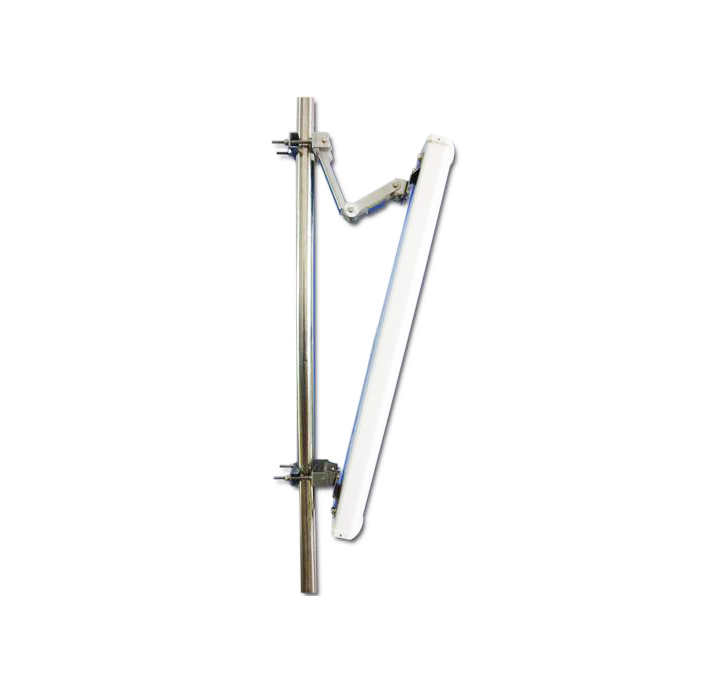

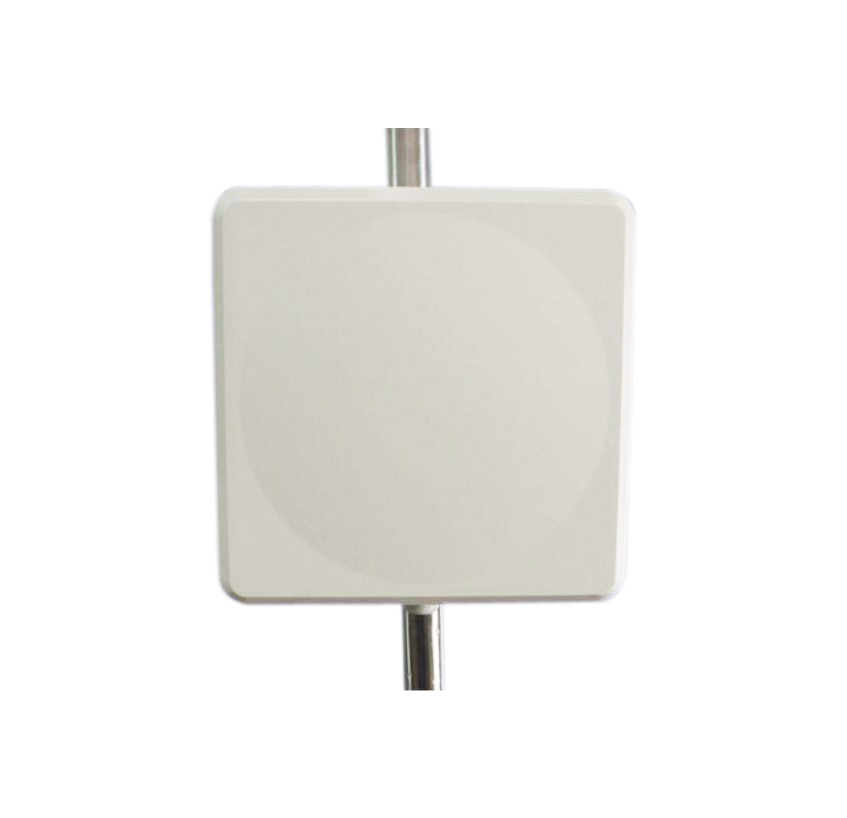


The BBT-2458FG1215V from BBT ANTENNAS is an outdoor omnidirectional WiFi antenna rated 12dBi at 2400-2500MHz and 15dBi at 5450-5850MHz, with 360° horizontal coverage, a 7°/5° vertical beam, four N-type female ports and a Φ170×1450mm PVC radome. One pole-mounted unit serves both bands in every direction for WISP base stations, point-to-multipoint fixed wireless access and outdoor WiFi networks.
BBT-2458FG1215V Parameters
|
Electrical |
||
|
Part Number |
BBT-2458FG1215V | |
|
Frequency Range |
2400-2500MHz | 5450-5850MHz |
|
Polarization Type |
Vertical | |
|
Gain |
12dBi | 15dBi |
|
3dB Beam-Width. H-Plan |
360° | 360° |
|
3dB Beam-Width. E-Plan |
7° | 5° |
|
VSWR |
≤1.5 | |
|
Input Impedance |
50Ω | |
|
Max Input Power |
20W | |
|
Lightning Protection |
DC Grounded | |
|
Mechanical |
||
|
Connector Type |
4×N-Type Female | |
|
Dimensions H*W*D (mm) |
Φ170*1450(mm) | |
|
Radome Material |
PVC | |
|
Radome color |
white | |
|
Operating Temperature Range |
-40ºC/+60ºC | |
|
Support Pole Diameter |
φ30-φ60(mm) | |
|
Rated Wind Velocity |
60m/s | |
The BBT-2458FG1215V datasheet (PDF) adds the VSWR curve and the radiation patterns for both bands.
What 12/15dBi Gain and a 7°/5° Vertical Beam Mean for Coverage
A broadband design gives the BBT-2458FG1215V high gain and stable performance on both bands. Each figure in the table has a direct effect on how a site performs:
- Two bands in one radome: 2.4GHz travels further and copes better with trees and buildings in the path, while 5.8GHz carries more bandwidth per user. With both bands in a single antenna, the pole needs one antenna and one set of clamps instead of two.
- Four N-type female ports: dual-band and multi-chain radios or access points connect through four separate coaxial feeders, and the threaded N-type interface holds up well on outdoor masts.
- 12/15dBi gain with a 7°/5° vertical beam: the antenna presses its energy into a flat disc around the horizon, so subscribers spread across flat, open ground far from the pole receive a stronger signal. The trade-off shows up close to the pole. When the mast is tall and users sit near its base, they can fall below the beam, and a lower-gain model from the comparison table below is the better fit.
- Strong anti-interference capability: the narrow vertical beam favors signals arriving near the horizon, where your subscribers are, over noise from above and below. The 5.8GHz band also gives you a cleaner channel plan when 2.4GHz is crowded.
- Vertical polarization: pair it with vertically polarized antennas at the subscriber end, because a polarization mismatch across the link costs signal strength.
- VSWR ≤1.5, 50Ω impedance and 20W max input power: a close match to standard 50Ω radios and coaxial cable on both bands, so transmit power goes into the air instead of reflecting back to the radio.
- White PVC radome, DC grounded lightning protection and a -40°C to +60°C rating: the antenna is built for all-weather operation outside. It fits φ30-60mm support poles and is rated for a wind velocity of 60m/s.
Where This Outdoor Dual-Band Omni Antenna Fits
We built the BBT-2458FG1215V for 2.4G/5.8G fixed wireless access transmission systems, point-to-multipoint coverage systems and WLAN/WiFi application systems. In the field, that means three kinds of projects.
WISP base stations for fixed wireless access
In rural and suburban service areas, subscribers sit in every direction around the tower. One omni on the base station radio serves them all from a single mount. The 2.4GHz band reaches distant subscribers and those behind light obstructions, while the 5.8GHz band delivers higher bandwidth to closer subscribers with a clear line of sight.
Outdoor WiFi for campuses, factories, ports and resorts
Mounted on a mast above an open area, the antenna gives access points a wide, even coverage layer across yards, docks, car parks and resort grounds. Our guide to outdoor WiFi transmission and coverage explains how high-gain omni, sector and horn antennas divide the work on a site.
Point-to-multipoint backhaul hubs
A central pole can collect the backhaul links from surveillance cameras, IoT gateways and remote access points spread around a site. Each remote point uses a directional antenna aimed back at the hub, and the omni at the hub serves every one of them.
How to Choose Among BBT Dual-Band Omni Antennas
The BBT-2458FG1215V is the highest-gain model in our dual-band omni lineup. The four models below all cover 2400-2500MHz with vertical polarization and 360° horizontal coverage, so the choice comes down to gain, vertical beamwidth, the upper band, connectors and size.
| Model | Frequency | Gain | Vertical Beamwidth | Connectors | Dimensions | Max Power |
|---|---|---|---|---|---|---|
| BBT-2458FG1215VThis antenna | 2400-2500 / 5450-5850MHz | 12 / 15dBi | 7° / 5° | 4×N-type female | Φ170×1450mm | 20W |
| BBT-2458FG1012V | 2400-2500 / 5450-5850MHz | 10 / 12dBi | 10.5° / 7° | 4×N-type female | Φ170×1000mm | 20W |
| BBT-Q2458M0810-N6 | 2400-2500 / 5150-5850MHz | 8 / 10dBi | 16° / 10.5° | 6×SMA-type female | Φ160×405mm | 100W |
| BBT-2458FG0608V | 2400-2500 / 5150-5850MHz | 6 / 8dBi | 25° / 16° | 1×N-type male | Φ20×280mm | 20W |
Figures come from the parameter table on each model's product page. The 6/8dBi model is also available with an N-type female connector as the BBT-2458FG0608V-NF.
- Flat terrain and distant subscribers: choose this BBT-2458FG1215V when users are spread far from the pole and you want maximum reach on both bands.
- Tall mast, nearby users or rolling terrain: choose the 10/12dBi BBT-2458FG1012V, or the 8/10dBi BBT-Q2458M0810-N6, a 6-port MIMO omni antenna. Their wider vertical beams keep close-in users covered.
- 5GHz channels in 5150-5450MHz: this model's upper band runs 5450-5850MHz, so choose the BBT-Q2458M0810-N6 or the BBT-2458FG0608V, which cover 5150-5850MHz.
- One band and one connector: choose a single-band 2.4GHz or 5.8GHz fiberglass omni antenna, such as the 2.4GHz 12dBi BBT-2425FG12V, the 2.4GHz 15dBi BBT-2425FG15V or the 5.8GHz 12dBi BBT-5758FG12V. The Omni 2400-7125MHz category lists the full range.
Our engineers will quote the BBT-2458FG1215V or any model in this table and reply as soon as possible.
Get a Dual-Band Omni QuoteInstallation and Wiring
A high-gain omni rewards careful installation. Plan the site around these points:
- Height and clearance: mount the antenna at the top of the pole with a clear 360° view. Keep metal structures and other antennas away from its radiating section at the same height.
- Keep it vertical: with a vertical beam of only 7°/5°, a leaning pole tips the beam toward the ground on one side and the sky on the other, and distant users lose signal. Check the antenna with a level during installation.
- Feeders and ports: label all four feeders by port before hoisting, and connect them following the port assignment in the datasheet and on the antenna label. Use low-loss coaxial cable, keep every run short and weatherproof each N-type connection.
- Transmit power: keep the radio output within the antenna's 20W max input power.
- Mounting and wind: clamp the antenna to a φ30-60mm support pole. At 1450mm long, it is rated for a wind velocity of 60m/s, and it operates from -40°C to +60°C.
- Grounding: the antenna is DC grounded for lightning protection. Bond the pole and all four feeders to earth as standard site practice requires.
Manufacturing and Quality at BBT ANTENNAS
BBT ANTENNAS has designed and manufactured antennas since 1991. More than 200 staff, including RF, microwave, simulation and structural engineers, work across R&D and production in a 30,000 m² workshop in use since 2021. Our quality and environmental management systems are certified to ISO 9001:2015 and ISO 14001:2015.
Production passes four QC stages: raw material, in-process, final and pre-shipment inspection. For an outdoor dual-band omni, network analyzers measure VSWR across both bands, and temperature-humidity chambers, rain test equipment and salt-spray chambers check how the design holds up in all-weather service.
We also offer OEM/ODM, with frequency bands, connectors and radome color discussed for each project. Our custom antenna manufacturing page explains how it works.
Our company video takes you inside BBT ANTENNAS and our factory:
Outdoor Omnidirectional WiFi Antenna FAQ
What projects is the BBT-2458FG1215V outdoor omnidirectional WiFi antenna used for?
It serves 2.4G/5.8G fixed wireless access transmission systems, point-to-multipoint coverage systems and WLAN/WiFi application systems. Typical projects are WISP base stations in rural and suburban areas, outdoor WiFi for campuses, factories, ports and resorts, and hub sites that collect backhaul links from cameras, IoT gateways and remote access points.
How do I connect the four N-type female ports?
Run a separate low-loss coaxial feeder from each antenna port to your radio or access point. Follow the port assignment given in the datasheet and on the label supplied with the antenna. When you request a quote, we will confirm the wiring for your radio.
With a 5° vertical beam at 15dBi, will users close to the pole get a weak signal?
They can. A high-gain omni concentrates its energy near the horizon, so users close to the base of a tall mast may sit below the main beam. Avoid mounting the antenna much higher than the coverage area needs, or choose a model with a wider vertical beam, such as the 10/12dBi BBT-2458FG1012V (10.5°/7°) or the 8/10dBi BBT-Q2458M0810-N6 (16°/10.5°).
Should a WISP base station use one omni antenna or several sector antennas?
One omni covers all 360° with a single antenna, so it is quick to install and suits sites with a moderate number of subscribers spread around the tower. Sector antennas give each direction more gain and more capacity, which suits sites with many subscribers or longer distances. For that role, BBT ANTENNAS also builds a dual-band 2.4/5.8GHz 4-port MIMO sector antenna. Our comparison of omni vs directional antennas in real projects explains the trade-off.
Can this antenna cover 5150-5450MHz?
No. Its upper band covers 5450-5850MHz. For channels across 5150-5850MHz, choose the BBT-Q2458M0810-N6 (8/10dBi) or the BBT-2458FG0608V (6/8dBi). For other bands, our engineers can discuss a version built for your project.
Which antenna should I use at the subscriber (CPE) end?
Use a vertically polarized panel or dish antenna aimed at the base station, so its polarization matches this omni. Pick a 2.4GHz model for subscribers on the 2.4GHz band and a 5GHz model that covers your 5.8GHz channels for the rest. Higher-gain CPE antennas suit subscribers farther from the tower.
Planning a WISP base station or an outdoor WiFi network on 2.4GHz and 5.8GHz? Contact our team, and we will reply with a BBT-2458FG1215V quote as soon as possible.
Request a Quote for BBT-2458FG1215V