
Base station antennas are the RF link between your network infrastructure and every connected device. Choosing the right omni or sector configuration for your frequency band, coverage area, and installation environment directly affects network capacity and signal quality. BBT ANTENNAS manufactures 5G/4G BTS omni and sector antennas from 698 MHz to 6 GHz, with full OEM/ODM customization for telecom operators, integrators, and antenna brands worldwide.
Last updated: September 2026How Base Station Antennas Power Wireless Networks
Every wireless network depends on the antenna at the tower, rooftop, or pole to transmit and receive radio signals across a defined coverage zone. In a macro cell deployment, a single site may serve thousands of subscribers across several kilometers. Small cells and micro base stations handle shorter distances in dense urban corridors, stadiums, and transit hubs where traffic demand concentrates.
The antenna type, gain, frequency band, and radiation pattern determine how far the signal reaches, how many users the sector supports, and how well the system handles interference from neighboring cells. Getting this selection wrong means coverage gaps, dropped connections, and wasted capital on infrastructure that underperforms.
Base station antennas also serve private LTE and 5G networks at ports, along railways, inside mines, and across industrial campuses where reliable, low-latency wireless communication is both a safety requirement and an operational necessity.
Omni vs. Sector Antennas: Which Type Fits Your Base Station Project?
The first decision in any base station antenna project is whether the site needs omni-directional coverage, directional sector coverage, or a combination of both. Each type serves a different deployment scenario, and the choice affects tower loading, capacity planning, and total system cost.
Omni Antennas for 360° Coverage
Omni-directional base station antennas radiate signals across the full horizontal plane, making them the right fit when a single mounting point must serve all surrounding directions. Typical deployments include rural and suburban macro cells, small cell nodes, emergency communication vehicles, and temporary event coverage where fast setup matters more than maximum capacity.
BBT ANTENNAS produces dual-band 5G/4G omni antennas covering 1710-2700 MHz and 3300-3800 MHz with ±45° dual polarization and multi-port configurations. These antennas suit tower-top, pole, and wall-mount installations where full-circle coverage is needed without the complexity of sector planning. View BBT's omni antenna lineup in the Omni 617-6000MHz product category.
Sector and Panel Antennas for Directional Capacity
Sector antennas concentrate RF energy into a defined horizontal beam width, typically between 33° and 90°, to serve a specific coverage sector at higher gain. Three 120° sectors or six 65° sectors on a single tower create a high-capacity macro site that handles far more traffic than any omni configuration.
BBT ANTENNAS produces multi-band sector and panel antennas covering 698 MHz to 6 GHz with gain from 10 to 17 dBi, ±45° cross-polarization, VSWR ≤1.5, and 3rd-order PIM performance at -140 dBc or lower. Models with electrical downtilt (0° to 15°) allow network planners to adjust vertical coverage remotely without climbing the tower.
These antennas serve urban macro base stations, highway coverage, DAS feeder networks, and high-density commercial zones. See the full sector range in the Sector 698-6000MHz product category, or browse all BTS antenna families in the BTS 5G/6G Antenna catalog.
Explore BBT Base Station Antennas
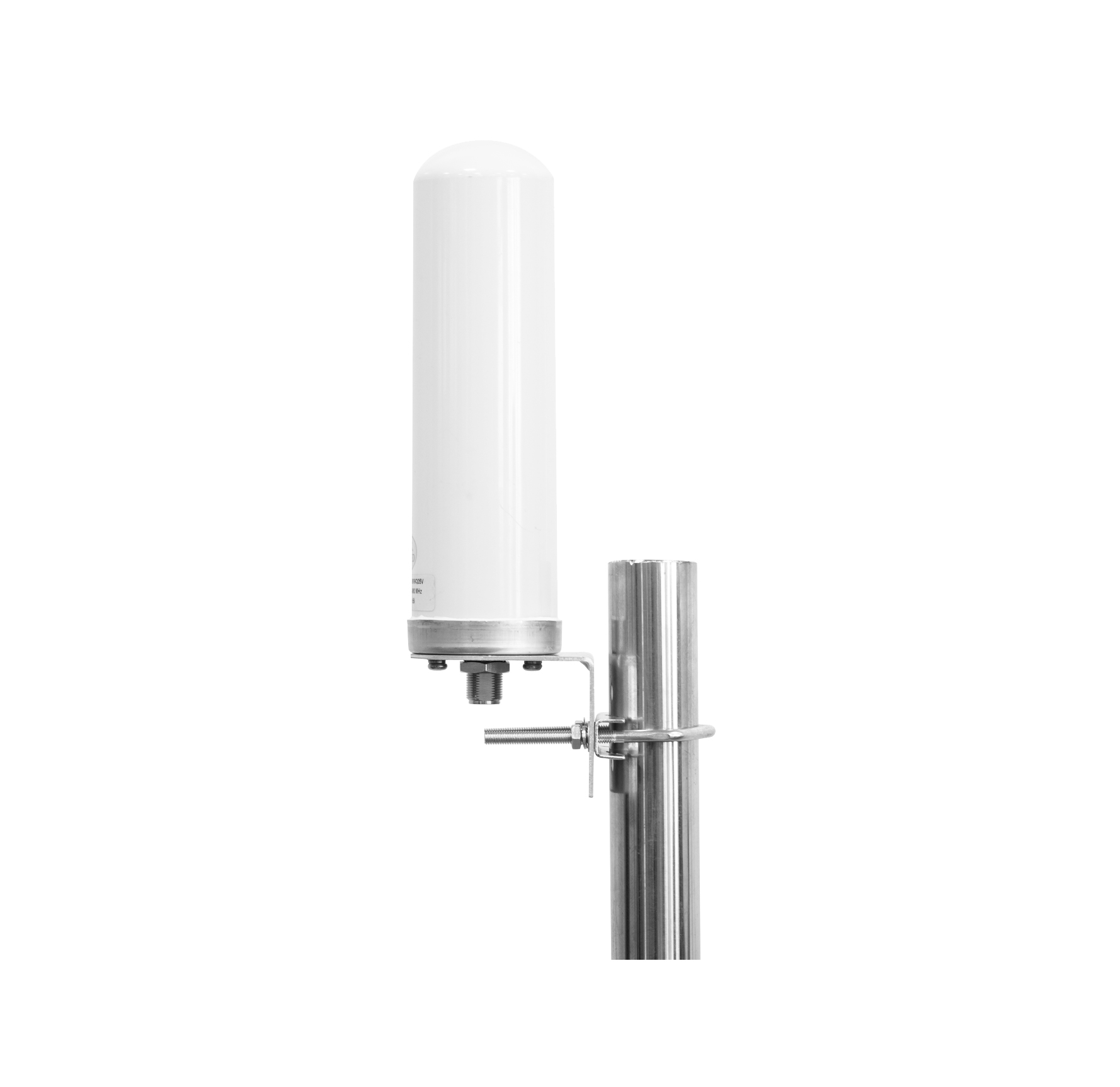
Broadband Omni Antenna
BBT-0660FG0204V
600–6000 MHz · 360° horizontal beamwidth
2 dBi lower band, 3–4 dBi upper band · N-Female
View Detail
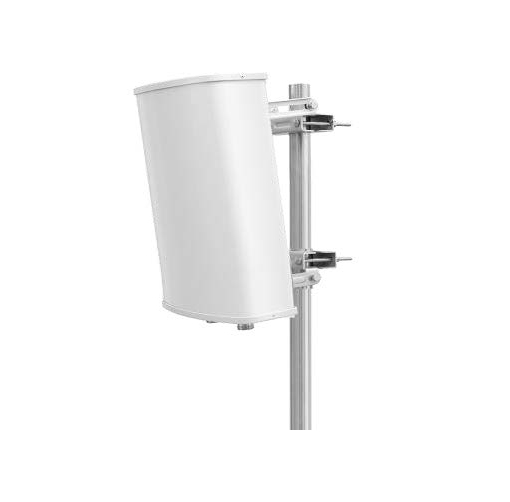
Multiband Panel Antenna
BBT-0638SA0912D080-N2
618–960 / 1700–2700 / 3300–3800 MHz
±45° polarization · 2 × N-Female
View Detail
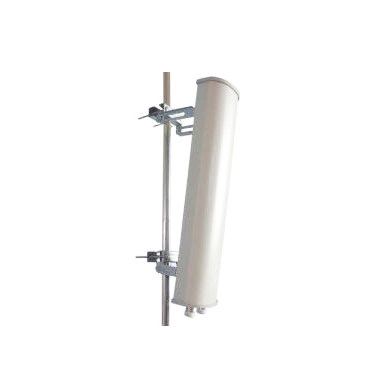
MIMO Sector Panel Antenna
BBT-0827PA08D065-N2
806–960 / 1710–2170 / 2170–2700 MHz
8 dBi · ±45° polarization · 2 × N-Female
View Detail
Key Specifications for Base Station Antenna Selection
Selecting a base station antenna requires matching several technical parameters to your project needs. These are the specifications that matter most during procurement and system design.
Frequency range: The antenna must cover the exact bands your network license and radio equipment use. Sub-1 GHz bands (698-960 MHz) provide long-range rural coverage. Mid-band frequencies (1710-2700 MHz) carry most LTE and 5G NR traffic. The 3.3-6 GHz range supports 5G capacity layers. Multi-band antennas that span two or three ranges reduce tower loading and installation cost by replacing multiple single-band units.
Gain and beam width: Higher gain extends coverage distance but narrows the beam. A 9 dBi omni covers a wide area with moderate range. A 17 dBi sector reaches further but serves a narrower slice of the azimuth. Match gain to your inter-site distance and subscriber density.
Polarization: ±45° cross-polarized (X-pol) antennas support 2x2 or 4x4 MIMO, multiplying data throughput compared to single-polarization designs. Virtually all modern BTS deployments require cross-polarization for adequate capacity.
VSWR and PIM: VSWR ≤1.5 across the operating band is the baseline for commercial base station deployments. Low passive intermodulation (PIM) at -140 dBc or better prevents interference between co-located carriers and is required for multi-operator tower sharing.
Electrical downtilt: Remote electrical tilt (RET) or fixed electrical downtilt lets engineers adjust vertical coverage without a tower climb. Tilt ranges of 0° to 10° or 0° to 15° are common across BBT's sector lineup.
Ports and connectors: Port count determines MIMO order and multi-band capability. N-type and 4.3-10 connectors are standard for outdoor BTS installations. Confirm connector gender, quantity, and weatherproofing against your radio unit specifications before ordering.
Mechanical and environmental fit: Radome material, wind load rating, operating temperature range, UV resistance, and mounting hardware must match the installation site. Coastal, tunnel, mine, and rooftop deployments each impose specific mechanical and environmental requirements that affect antenna selection.
Base Station Antenna Applications Across Industries
BBT base station antennas serve a wide range of wireless communication deployments. The following application scenarios are directly supported by BBT's 5G/4G omni and sector product lines:
Mobile communication systems: Macro cell and small cell coverage for commercial 4G LTE and 5G NR networks in urban, suburban, and rural environments. BBT sector antennas handle the high-capacity demands of dense urban sites, while omni models serve lower-density areas efficiently.
Emergency communication: Rapid-deployment and mobile command base stations for disaster response, public safety, and first responder networks. These deployments often require fast setup, all-direction coverage, and reliable operation under harsh field conditions.
Port and maritime communication: Shore-to-ship coverage and port area networks for vessel tracking, automated crane control, container logistics, and security monitoring at seaports and inland waterways.
Rail and tunnel coverage: Continuous wireless coverage along rail corridors, subway tunnels, and underground transit systems where signal propagation is physically constrained. Antenna mounting, beam shaping, and environmental protection are all critical in these installations.
Mine communication and transmission: Underground and open-pit mining operations that require reliable voice, data, video, and safety monitoring links through RF-hostile environments with rock, dust, and heavy machinery interference.
Private network communication: Dedicated LTE or 5G networks for factories, campuses, logistics hubs, energy facilities, and critical infrastructure where public networks cannot meet latency, security, or availability requirements.

Why RF Engineers and Procurement Teams Choose BBT ANTENNAS
BBT ANTENNAS is a full-line base station antenna manufacturer with the product range, production capacity, and quality infrastructure to support telecom operators, system integrators, and OEM/ODM partners worldwide.
- Complete BTS antenna coverage: 5G/4G omni, sector, panel, yagi, and dish antennas spanning 698 MHz to 6 GHz with gain from 2 dBi to 17+ dBi.
- ±45° dual polarization and multi-port configurations: Standard 2-port and 4-port MIMO-ready designs across the product line.
- Low PIM performance: Sector antennas tested to -140 dBc or lower, meeting operator-grade requirements for co-site and multi-carrier tower sharing.
- 30+ years of antenna manufacturing: BBT's history begins in 1991, with overseas marketing since 1998 and exports to markets across the globe.
- 200+ employees and a 30,000 m² production facility: Dedicated RF, microwave, simulation, structural, and quality control engineering teams working under one roof.
- ISO 9001:2015 and ISO 14001:2015 certified: Systematic quality and environmental management across all production processes.
- Independent intellectual property and product patents: Proprietary antenna designs backed by in-house R&D capability.
- Four-stage quality control: Raw material inspection, in-process QC, finished product testing, and shipping verification using network analyzers, PIM testers, environmental chambers, and salt-spray and drop-test equipment.
- Full OEM/ODM customization: BBT manufactures antennas to your frequency, gain, beam width, polarization, port count, connector, mechanical design, and branding requirements. Whether you need a modified standard product or a clean-sheet ODM project, BBT's engineering team works from your specifications through prototype, testing, and volume production.
Interested in evaluating BBT for your next base station project? Visit the Custom & OEM page for details on BBT's manufacturing and private-label capabilities.
Frequently Asked Questions About Base Station Antennas
What frequency bands do BBT base station antennas cover?
BBT's base station antenna portfolio spans 698 MHz to 6 GHz, covering all major cellular bands including 700 MHz, 850/900 MHz, AWS/PCS 1700-2100 MHz, 2.6 GHz, and 5G NR sub-6 GHz bands from 3.3 to 6 GHz. Multi-band models combine two or three frequency ranges in a single enclosure to reduce tower loading and installation cost.
What is the difference between omni and sector antennas for base stations?
Omni antennas provide 360° horizontal coverage from a single unit and are suited to rural sites, small cells, and emergency deployments. Sector antennas focus energy into a directional beam, typically 33° to 90° horizontal, for higher gain and greater capacity. Most macro base stations use three or six sector antennas to create a full-circle coverage pattern with far more traffic handling than an omni setup.
Can BBT provide custom or OEM/ODM base station antennas?
Yes. BBT ANTENNAS offers full OEM and ODM services for base station antennas. You can specify frequency range, gain, beam width, polarization, port configuration, connector type, radome design, and branding. BBT's in-house RF and structural engineering teams handle custom development from initial simulation through prototype, testing, and volume production.
What PIM and VSWR performance can I expect from BBT base station antennas?
BBT sector antennas achieve 3rd-order passive intermodulation (PIM) levels of -140 dBc or lower, and VSWR of 1.5:1 or better across the operating band. These figures meet the requirements for multi-carrier and multi-operator tower-sharing environments where intermodulation interference must be kept to a minimum.
What certifications does BBT hold for base station antenna manufacturing?
BBT operates under ISO 9001:2015 quality management and ISO 14001:2015 environmental management certifications. The company holds independent intellectual property and product patents. Production quality is maintained through a four-stage inspection process covering raw materials, in-process checks, finished product testing, and pre-shipment verification, using network analyzers, PIM testers, environmental chambers, and mechanical test equipment.
How do I request samples or a quote for a base station antenna project?
Contact BBT ANTENNAS directly through the website contact page with your project specifications, including target frequency bands, required gain and beam width, polarization, port and connector requirements, installation environment, and estimated quantity. BBT's sales and engineering team will respond with product recommendations, technical data, and pricing. Sample units are available for evaluation before volume orders.
Have a base station antenna project? Share your frequency, coverage, and deployment requirements with BBT's engineering team.
Request a Quote