

Quick Answer: Effective dock door RFID portals require UHF panel antennas with Right-Hand Circular Polarization (RHCP), moderate to high gain (9 to 12 dBi), and controlled beamwidths (40° to 60°). Positioning paired side-mounted antennas slightly angled inward across the doorway, combined with front-to-back ratios of 17 dB or higher, establishes a clean read zone that reads fast-moving tagged pallets while stopping cross reads from adjacent staging lanes and parked trailers.

What a Warehouse RFID Portal Does (and Why the Antenna Matters)
A warehouse RFID portal automates data collection at transition points where goods move between storage, staging, and transport. Mounted directly at dock doors, roll-up gates, or conveyor choke points, the portal captures tag data automatically as forklifts or pallet jacks move freight through the entrance. This eliminates manual barcode scanning, reduces dock dwell times, and provides instant shipping and receiving verification.
While the RFID reader provides processing power, the antenna dictates the physical geometry of your read zone. At a busy shipping dock, the antenna must complete two opposing tasks simultaneously:
- Deliver sufficient RF power into the doorway opening to energize every tag across dense pallets, nested containers, or mixed packaging in seconds.
- Confine radiated energy strictly to the passage zone so the portal never captures inventory stacked on nearby staging racks or goods inside an adjacent trailer.
In high-throughput facilities, such as event staging hubs or distribution centers handling mixed plastic crates, metal flight cases, and corrugated boxes, poor antenna choice leads directly to operational errors. Missed reads force manual rescans and hold up loading schedules, while accidental cross reads create phantom inventory movements in your warehouse management software. Choosing the correct antenna specifications and mounting layout is the most dependable way to secure accurate portal performance. For a broader overview of how RFID hardware fits into facility workflows, review our guide to RFID antennas for inventory tracking.
Keep the Read Zone Focused on Moving Cargo
Read the pallet passing through the doorway while keeping nearby staged stock outside the intended read zone.
Conceptual view. Antenna placement, reader settings and software filtering work together to control reads.
Antenna Selection Criteria for Dock Door Portals
Specifying antennas for dock doors requires matching antenna electrical characteristics to the dimensions of the doorway, the speed of forklift transit, and the density of the freight. Four primary criteria determine whether an antenna model fits portal duty.
1. Operating Frequency and Regional Standards
UHF RFID systems operate across distinct regional frequency allocations. Your portal antenna must be tuned to match your reader module and local radio regulations:
- FCC (North America, parts of Latin America): 902 to 928 MHz
- ETSI (Europe, Middle East, Africa): 865 to 868 MHz (lower band) and 915 to 921 MHz (upper band)
- National Standards (China, Asia-Pacific): 840 to 845 MHz and 920 to 925 MHz
Operating an antenna outside its tuned frequency band causes elevated Voltage Standing Wave Ratio (VSWR), degrading radiated power and creating blind spots in the doorway.
2. Gain, Beamwidth, and Read Zone Confinement
Gain and beamwidth define the shape and reach of the RF beam. There is an inverse relationship between gain and beam coverage angle:
- 9 to 10 dBi Antennas: Offer broader beamwidths, typically 55° to 60° in both planes. This wide radiation pattern provides complete floor-to-lintel coverage for standard dock doors measuring 8 to 10 feet wide, capturing tags situated at varying pallet heights.
- 12 dBi Antennas: Produce a concentrated beam with narrower 38° to 40° half-power beamwidths. These directional panels deliver extended reading range for oversized bay doors (12 to 14 feet wide), exterior vehicle check-in lanes, or high-mounted overhead placements.
The table below compares three industrial UHF panel antennas manufactured by BBT ANTENNAS for portal and checkpoint deployments:
| Specification | BBT-RFID09C09-270 | BBT-RFID09C10 | BBT-09PA12C040 |
|---|---|---|---|
| Primary Role | Standard Dock Portals / Gates | Heavy-Duty Industrial Portals | Wide Bays / Overhead Mounts |
| Frequency Range | 902-928 MHz (FCC) | 902-928 MHz (FCC / EU optional) | 902-928 MHz (FCC / EU optional) |
| Gain | 9 dBi | 10 dBi | 12 dBi |
| Polarization | RHCP | RHCP | RHCP / Circular |
| 3dB Beamwidth (H / E) | 60° / 55° | 45° / 60° | 40° / 38° |
| VSWR | ≤ 1.3 | ≤ 1.3 | ≤ 1.3 |
| Front to Back Ratio | ≥ 17 dB | ≥ 17 dB | ≥ 17 dB |
| Connector Type | SMA Male | N-Type Female | N-Type Female |
| Dimensions | 270 × 270 × 60 mm | 385 × 385 × 30 mm | 445 × 445 × 30 mm |
| Ingress Protection | IP67 Waterproof | IP67 Waterproof | IP67 Waterproof |
3. Polarization: Right-Hand Circular Polarization (RHCP)
In warehouse portal applications, carton labels and pallet tags pass the reader at unpredictable angles. When goods are restacked or shifted, tag inlays may face horizontally, vertically, or diagonally.
Linear polarized antennas require tag inlays to align parallel with the antenna's electrical field, leading to blind spots when tags rotate. Right-Hand Circular Polarization (RHCP) radiates electromagnetic energy in a rotating helical pattern. This allows the portal to read tags regardless of orientation, delivering the multi-angle capture necessary for moving loads.
4. Front-to-Back Ratio, Mechanical Ruggedness, and Connectors
Two mechanical and RF factors are essential for dock environments:
- Front-to-Back (F/B) Ratio: An F/B ratio of 17 dB or higher prevents rear-facing side lobes from activating tags stored on staging racks directly behind the portal uprights.
- Industrial Environmental Rating: Dock doors experience driving rain, humidity, diesel fumes, and temperature swings. Antennas must feature heavy-duty UV-stable ABS radomes, IP67 ingress protection, and a verified operating temperature range of -40°C to +60°C.
- Connector Reliability: N-Type Female connectors provide threaded, weatherproof joints suited for long coaxial runs, while compact SMA fittings work well in self-contained enclosure pillars.
Antenna Placement and Array Layout at Dock Doors
Hardware placement is just as critical as component specifications. A poorly aimed antenna of excellent quality will still suffer from missed reads and false alarms. Industrial dock portals typically use one of three array configurations.
Standard Portal Array Configurations
- Dual-Sided Bilevel Array (4 Antennas): Two antennas mounted vertically on the left upright (at 3 feet and 6 feet) and two mounted on the right upright. This provides cross-firing coverage that penetrates both sides of a stacked pallet.
- Three-Sided U-Frame Array (5 to 6 Antennas): Four side-firing panel antennas combined with one or two overhead downward-firing antennas mounted to the door header. This setup reads top-labeled totes, nested parcel bags, and multi-tier rolling cages.
- Narrow Gate Bi-Antenna Setup (2 Antennas): One 9 dBi or 10 dBi antenna on each side, suitable for narrow pedestrian doors, roller conveyors, or single-pallet access lanes.
Follow these placement guidelines to establish a defined, reliable read field:
- Inward Angle (Toe-In): Never mount side antennas flat against the wall facing directly across the door at 90°. Angle them 15° to 20° inward toward the center of the doorway opening. This creates a converging focal zone that concentrates energy in the transit path and prevents energy from spilling forward into the warehouse floor.
- Downward Tilt for Upper Units: Position upper antennas roughly 6 to 7 feet above the floor and tilt them downward by 10° to 15°. This directs the main lobe toward the middle of the pallet rather than across the ceiling toward distant shelving.
- Sufficient Upright Clearance: Mount antennas inside protective steel bollards or recessed portal enclosures to protect them from forklift mast impacts while ensuring no metallic framing blocks the antenna face.
Solving Missed Reads and Cross Reads
Field integrators encounter two recurring challenges at dock doors: failure to read tags that pass through, and reading tags that should have been ignored.
Troubleshooting Missed Reads
Missed reads occur when RF energy fails to energize the tag chip, or when the tag backscatter signal is too faint for the reader to decode:
- RF Shielding from Freight: Liquid containers, canned goods, and metal drums absorb or reflect UHF signals. If freight contains dense materials, arrange antennas on both sides of the door and consider adding an overhead panel to catch line-of-sight tag positions.
- Rapid Transit Speeds: If forklifts drive through at high speed, tags spend fewer milliseconds within the antenna beam. Upgrading from a low-gain antenna to a 10 dBi panel like the BBT-RFID09C10 provides the elevated field strength needed to power tags quickly during fast passes.
- Cable Signal Attenuation: Long coaxial cable runs between reader and antenna degrade transmit power. Use low-loss RF cables (such as LMR-240 or LMR-400 equivalent) and keep cable lengths under 10 meters whenever possible.
Stopping Cross Reads and Ghost Movement Records
Cross reading happens when an antenna detects tags on nearby staging racks, forklifts queuing in neighboring aisles, or trailers parked outside an adjacent dock bay. This generates false inventory moves that disrupt tracking systems. To stop cross reads:
- Select High Front-to-Back Ratio Panels: Antennas with an F/B ratio of 17 dB or higher suppress back-lobe radiation, shielding inventory resting against the wall behind the portal frame.
- Constrain the Beam Angle: If dock bays sit close together, replace wide 65° beam antennas with 40° to 45° directional models like the BBT-09PA12C040. A narrower beam keeps RF power focused within the assigned lane.
- Tune Reader Output Power: Running antennas at maximum transmission power (30 dBm) is rarely necessary for a 9-foot doorway. Lower reader power incrementally until the read zone covers the opening without leaking into adjacent lanes.
- Deploy Physical RF Absorbers or Metal Shields: Install grounded aluminum sheet backing or carbon-loaded RF absorber panels on the rear and outer faces of portal uprights to absorb stray lateral reflections.
How to Plan and Run a Portal Antenna Field Trial
Laboratory testing cannot replicate the multipath reflections, metal dock levelers, and rolling forklift traffic found in a real warehouse. Before ordering production quantities, run a structured field pilot using sample antennas:
- Document Site Constraints: Record door opening dimensions, nearest rack distance, conveyor or vehicle travel speeds, and ambient temperature conditions.
- Assemble a Representative Test Load: Build a test pallet using your facility's most challenging combination of tagged products, including metal-clad goods, liquids, and tightly packed cartons.
- Mount Sample Antennas on Adjustable Stands: Test antenna heights between 3 and 7 feet, experimenting with inward toe-in angles of 10°, 15°, and 20°.
- Execute Controlled Passes: Drive the test load through the portal at minimum, average, and maximum anticipated transit speeds. Perform 20 passes in each direction (inbound and outbound).
- Monitor Read Rates and Stray Reads: Verify that 100% of target tags are captured while zero tags from adjacent lanes or background storage are recorded. Adjust reader power and antenna tilt until both conditions are met.
- Finalize Specification and Mounting Brackets: Record the confirmed antenna gain, beamwidth, cable length, and bracket angles for full facility rollout.
UHF RFID Panel Antennas for Warehouse Portals
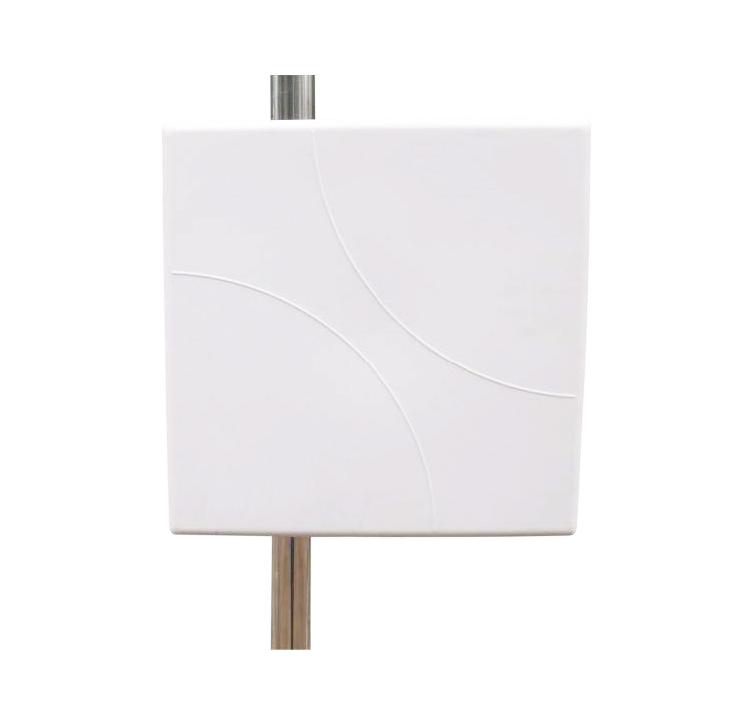
UHF RFID Panel Antenna
Model: BBT-RFID09C10
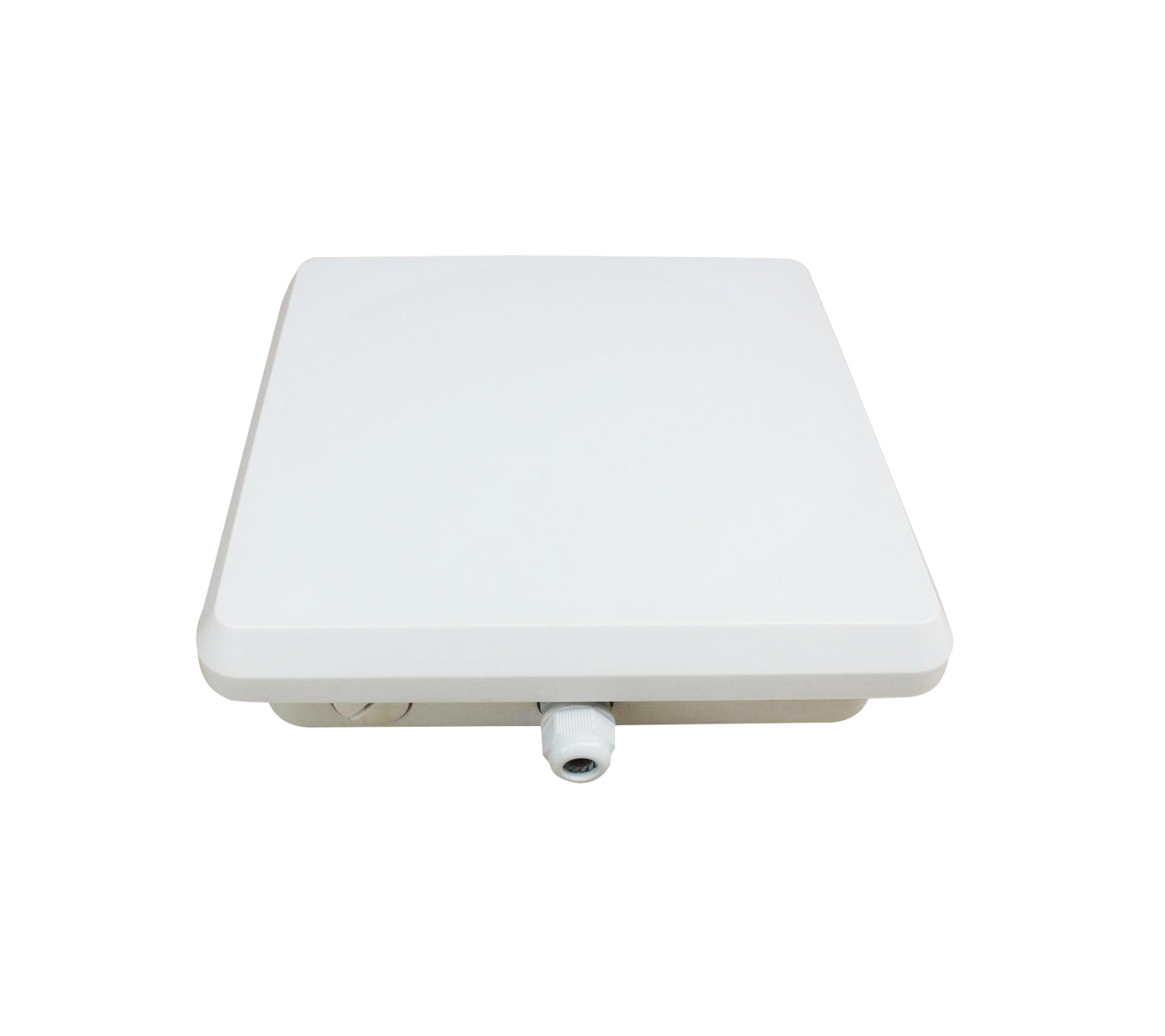
Compact UHF RFID Antenna
Model: BBT-RFID09C09-270
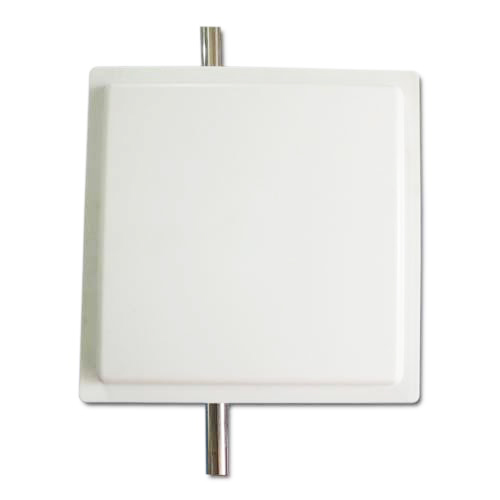
High Gain UHF RFID Antenna
Model: BBT-09PA12C040
Get a Portal Antenna Recommendation and Quote
Tell us about your dock doors, the freight moving through them and the reader you run. We will recommend the antenna model and portal layout for your site.
We will talk about:
- Portal Physical Dimensions: Width, height, and clearance of the dock doorway or roll-up entrance.
- Target Frequency Band: Required regional standard (FCC 902-928 MHz, ETSI 865-868 MHz, or national frequency band).
- Array Architecture: Planned number of antennas per door (e.g., dual 2-antenna setup, 4-antenna cross-fire portal, or overhead array).
- Reader Model and Interface: Reader brand, output power capabilities, and required RF connector types (N-Type Female or SMA Male).
- Coaxial Cable Requirements: Cable type, length, and connector termination needed between portal masts and reader enclosure.
- Operating Conditions: Indoor warehouse, refrigerated cold storage (-30°C), or outdoor exposed loading bays requiring IP67 weather sealing.
- Target Quantities and Delivery Schedule: Prototype sample requirements for field trials and estimated batch production volumes.
- Private-Label and Customization Needs: Custom frequency tuning, radome color, silkscreen branding, or custom mounting bracket designs. Learn more about our custom antenna design and OEM/ODM manufacturing capabilities.
Frequently Asked Questions
How many antennas do I need for a single warehouse dock door?
Most standard 8-to-10 foot dock doors use a 4-antenna array, with two antennas mounted vertically on each side of the frame. This cross-firing layout ensures tag visibility on both sides of a passing pallet regardless of stacking patterns. Narrow single-pallet conveyors can operate effectively with two 9 dBi antennas, while tall 12-to-14 foot doors or complex packaging often add one or two overhead downward-firing antennas to eliminate top blind spots.
Can circular polarized antennas read linearly polarized tags reliably?
Yes. Right-Hand Circular Polarization (RHCP) antennas read linearly polarized tags regardless of whether the tag inlay is oriented horizontally, vertically, or at an angle. While there is a theoretical 3 dB polarization mismatch loss when pairing a circular antenna with a linear tag, this is easily accommodated by proper reader power tuning and antenna gain selection, making circular polarization the industry standard for uncontrolled dock environments.
What is front-to-back ratio and why is it critical for dock doors?
The front-to-back (F/B) ratio measures the signal strength radiated in the intended forward direction relative to unwanted energy escaping backward. In a warehouse portal, an F/B ratio of 17 dB or higher ensures the antenna does not energize tags resting on staging racks or passing forklifts directly behind the portal mounting posts, preventing ghost reads and corrupted inventory records.
Does BBT ANTENNAS provide OEM and custom antenna manufacturing for RFID projects?
Yes. BBT ANTENNAS operates a 30,000-square-meter manufacturing facility with ISO 9001:2015 and ISO 14001:2015 certifications. We offer build-to-print OEM production, private-label branding, and full ODM custom RF engineering. We can customize frequency tuning (US, EU, CN bands), gain, beam patterns, cable lengths, connector interfaces, and radome enclosures to meet project specifications.
What environmental rating is recommended for warehouse dock door antennas?
Warehouse dock doors require antennas with an IP67 waterproof and dustproof rating and an operating temperature range of -40°C to +60°C. Loading bays frequently open to ambient outdoor weather, exposing equipment to driving rain, heavy condensation, humidity, road salt, and vehicle exhaust fumes. Heavy-duty ABS radomes protect internal RF circuitry against environmental aging and minor physical impacts.
How can I stop antennas from reading tags on nearby warehouse shelves?
To eliminate cross reads from adjacent staging areas, apply a combined hardware and software strategy: choose directional antennas with controlled 40° to 45° beamwidths and high front-to-back ratios (≥ 17 dB); angle the antenna panels 15° to 20° inward toward the center of the passage; lower reader transmit power to the minimum level needed for doorway coverage; and configure software RSSI thresholds and read window timers to filter out weak background tag detections.
Need Reliable RFID Antennas for Your Portal Project?
BBT ANTENNAS manufactures high-performance UHF panel and portal antennas for systems integrators, equipment brands, and logistics facilities worldwide. Contact our engineering team to discuss your doorway layout, request sample units for field testing, or start an OEM/ODM production run.