
Open RAN opens the interfaces between the O-RU, O-DU and O-CU. The antenna still connects to the O-RU through RF connectors, so standard passive antennas work as before. Match the antenna to the O-RU's port count, frequency bands, per-port power and connector type. BBT ANTENNAS supplies 4-port and 8-port ±45° multiband panel antennas covering 3300–3800 MHz, with OEM/ODM customization.
Last updated: October 2026
This guide is for O-RU and small cell vendors, private 5G integrators and neutral host RF teams who need to fit external antennas to O-RAN radio units. It covers which radio units take an external antenna, which specifications have to line up between radio and antenna, and which BBT models fit each case.
What Open RAN Changes, and What Stays the Same at the Antenna
The O-RAN ALLIANCE specifications divide the radio access network into three logical parts. The O-RU (O-RAN radio unit) handles RF and the lower physical layer, the O-DU (distributed unit) runs the rest of the baseband processing, and the O-CU (central unit) handles the higher protocol layers. RAN Intelligent Controllers (RIC) add software control on top.
The O-RU and O-DU talk over an open fronthaul interface built around the 7.2x lower-layer split, so an operator can pair a radio from one vendor with baseband software from another. Fronthaul, midhaul and the RIC interfaces all carry digital data.
Between the O-RU and the antenna, the link is the same as on any traditional cell site: a 50 Ω coaxial RF connection through jumper cables and connectors. Any well-specified passive antenna can serve an O-RAN site, provided it matches the O-RU it connects to: the same bands, the right number of ports, enough power handling and compatible connectors.
Open digital interfaces defined by O-RANStandard RF connection, unchanged
Which O-RAN Radio Units Need an External Antenna?
Whether an antenna is needed at all depends on the radio unit's form factor. Common O-RU types and how they connect:
| Radio unit type | How the antenna connects | What to specify | BBT option |
|---|---|---|---|
| Massive MIMO radio units (32T32R, 64T64R) | The antenna array is built into the unit | No external antenna. Array performance is part of the radio specification | Not required |
| Outdoor macro and micro O-RUs (2T2R, 4T4R, 8T8R) | RF ports on the radio, connected by short jumpers to an external antenna on the same pole or mast | ±45° dual-polarized sector or panel antenna with one port per transmit/receive path, commonly a 65° horizontal beam on three-sector sites | Sector and panel antennas, 698–6000 MHz |
| Pole- and wall-mounted small cell O-RUs | Many outdoor models have external RF ports | Compact, lower-gain panel with a wide beam for street coverage, or an omni antenna for 360° around a pole | Compact 4-port panel (BBT-0638SA0608D070-N4) Broadband omni antenna (BBT-0660FG0204V) |
| Indoor small cell O-RUs | Most use integrated antennas; some models add external antenna ports | Ceiling antennas with the same port count and bands as the radio | 4T4R MIMO ceiling antenna Ceiling antennas, 330–6000 MHz |
| Radio units feeding multi-floor buildings | The O-RU drives a distributed network of indoor antennas | Ceiling, wall-mount and log-periodic antennas laid out floor by floor | Indoor DAS antennas |
These are common patterns rather than fixed rules. Always confirm the RF port count and connector type on the O-RU datasheet before you select an antenna.
BBT Multiband Antennas for O-RAN Radio Units
The outdoor rows in the table map to three BBT ±45° multiband panels, all covering 3300–3800 MHz, the range that carries n78 and CBRS (n48): an 8-port panel for macro and micro sites, a 4-port low-PIM panel for shared multi-band sites, and a compact 4-port panel for street poles and building walls.
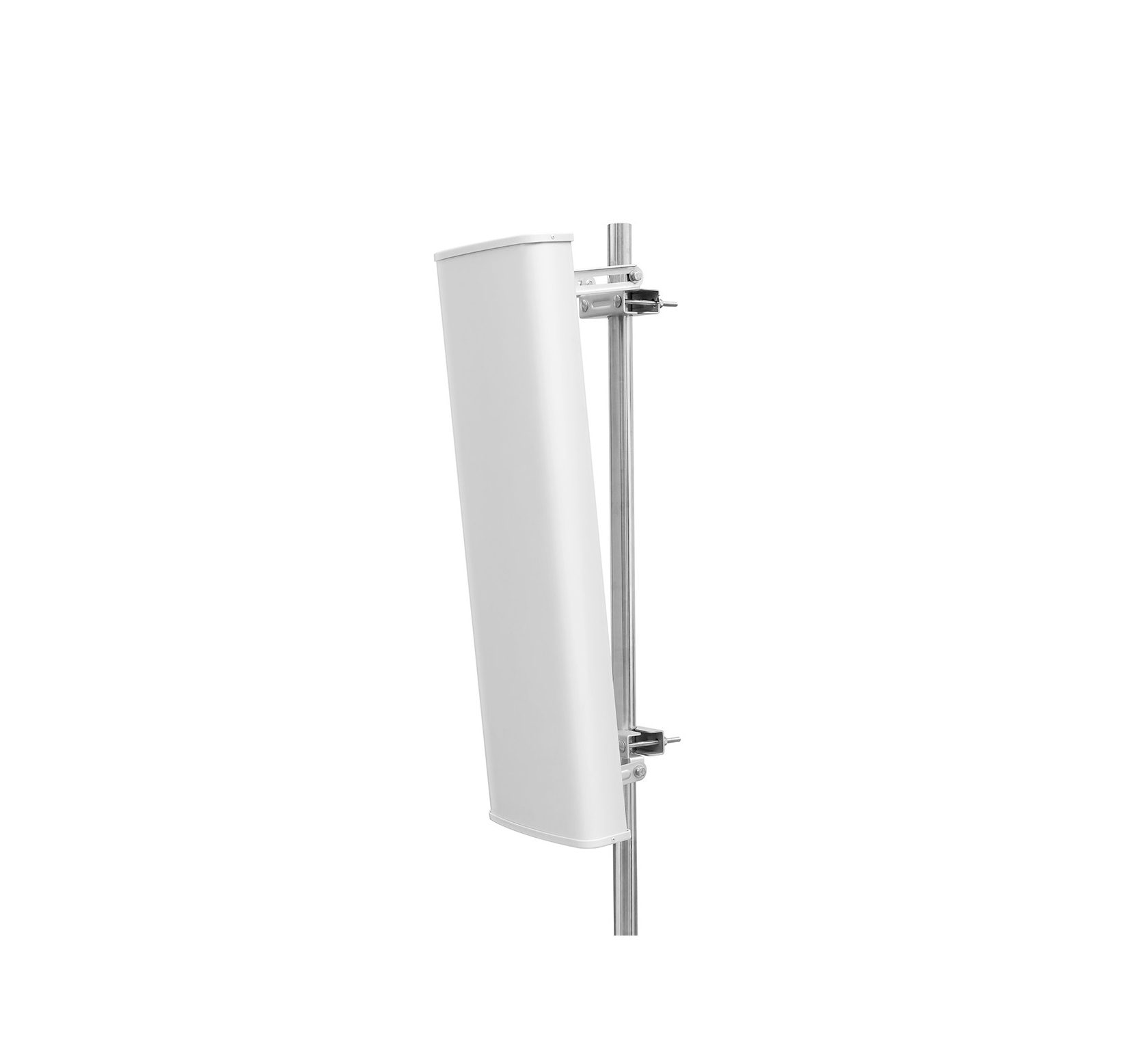
8-Port Multiband Panel Antenna
BBT-0638SA0812D065-N8
698–960 / 1710–2700 / 3300–3800 MHz
8 / 12 / 12 dBi · ±45° · 65° H-beam
Isolation ≥ 20 / 22 / 22 dB · 100 W
8 × N-Female · DC grounded
View Detail
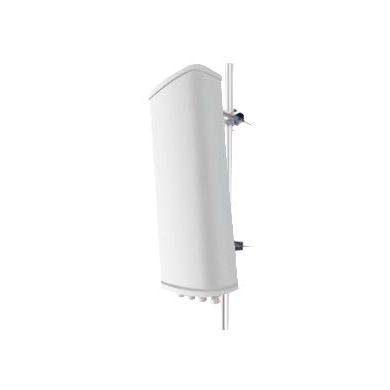
4-Port Low-PIM Multiband Panel
BBT-0638SA1014D065-N4
698–960 / 1710–2700 / 3300–3800 MHz
10 / 14 / 14 dBi · ±45° · 65° / 60° / 60° H-beam
IM3 ≤ -150 dBc (2 × 43 dBm) · 100 W
4 × N-Female · IP65
View Detail
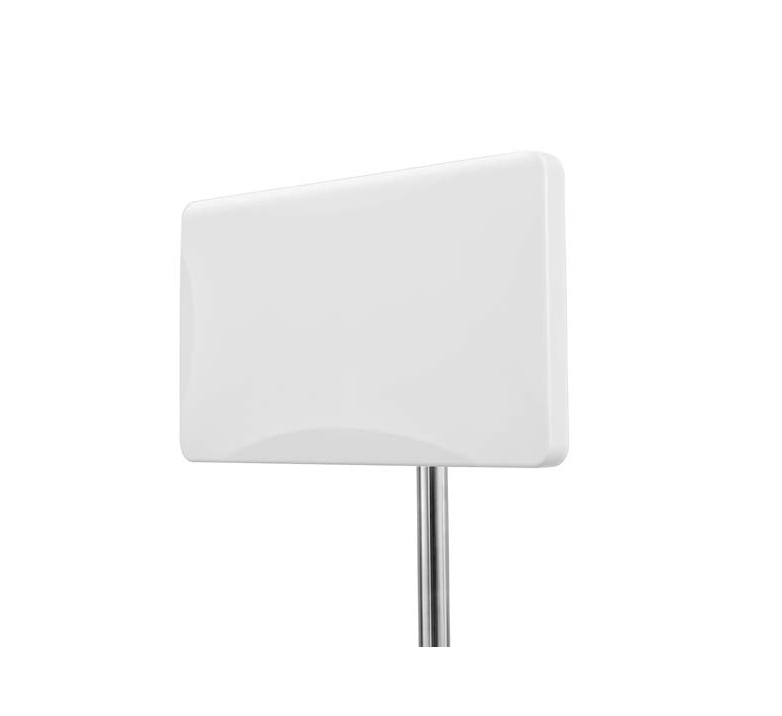
Compact 4-Port Panel Antenna
BBT-0638SA0608D070-N4
698–960 / 1700–2700 / 3300–3800 MHz
6 / 7.5 / 7.5 dBi · ±45° · 75° / 70° / 68° H-beam
50 W · 4 × N-Female
390 × 280 × 70 mm · white PC+ABS radome
View Detail
Need coverage above 3800 MHz or a 360° pattern around a pole? Compare the broadband omni antenna (BBT-0660FG0204V, 600–6000 MHz), or browse the full range of sector and panel antennas.
Specifications to Match Between the O-RU and the Antenna
Put the O-RU datasheet next to the antenna datasheet and check these six points before you order:
| Check | On the O-RU datasheet | On the antenna datasheet |
|---|---|---|
| Ports | Number of transmit/receive paths (2T2R, 4T4R, 8T8R) | One RF port per path at the O-RU's band |
| Frequency | Operating bands and occupied bandwidth | Frequency range covering every O-RU band |
| Coverage | Site type: three-sector, street-level or indoor | Gain and horizontal beamwidth |
| Isolation and PIM | Number of carriers and bands sharing the antenna | Port-to-port isolation and IM3, with the test power stated |
| Power and connectors | Maximum output power per port, RF connector type | Maximum input power above the per-port output, matching connector (N or 4.3-10) |
| Mounting and environment | Mounting position, pole size, site climate | Pole diameter range, downtilt bracket, rated wind velocity, operating temperature, lightning protection |
Matching Antenna Ports to O-RU Transmit and Receive Paths
Each transmit/receive path on the O-RU needs its own antenna port. A 2T2R radio uses the two ports of one ±45° dual-polarized antenna. A 4T4R O-RU needs four ports at its band, typically two ±45° columns in one radome or two dual-polarized antennas side by side, and an 8T8R O-RU needs eight. On a multiband antenna, ports are usually assigned to specific band ranges, so the total connector count tells only part of the story. Check the port-to-band map on the full datasheet against your O-RU band, or send BBT ANTENNAS the O-RU port diagram and our engineers will confirm the fit before you order.
Frequency Bands for Open RAN and Private 5G
Private and neutral host O-RUs commonly run in the 3.3–5 GHz mid-band. How the main 5G NR bands line up with BBT coverage:
| 5G NR band | Frequency range | Typical use | BBT coverage |
|---|---|---|---|
| n78 | 3300–3800 MHz | Main 5G mid-band in many markets, also used for private networks | Fully covered by the 3300–3800 MHz panels on this page |
| n77 | 3300–4200 MHz | Wider C-band range, including several local private 5G allocations | Panels cover 3300–3800 MHz; above 3800 MHz use the broadband omni or a custom design |
| n48 (CBRS) | 3550–3700 MHz | US shared spectrum for private LTE and 5G | Fully covered by the 3300–3800 MHz panels |
| n79 | 4400–5000 MHz | Used in Japan and China, and in some private networks | Broadband omni (600–6000 MHz) or a custom design |
Many national private 5G allocations sit inside n77 or n78. Germany's local 5G licences use 3700–3800 MHz, which the BBT panels cover. UK shared access licences at 3800–4200 MHz sit above that range, so use the 600–6000 MHz BBT-0660FG0204V or ask BBT for a custom panel. The omni has a single N-Female port, so plan one antenna per O-RU port.
Gain, Beamwidth, Isolation and PIM
Three-sector outdoor sites commonly use a horizontal beam of about 65° per sector. The 8-port panel holds 65° across all three bands at 8 / 12 / 12 dBi, and the 4-port low-PIM panel delivers 10 / 14 / 14 dBi with a 65° / 60° / 60° beam. Street-level small cells need wider, lower-gain coverage close to the pole, where the compact panel's 6 / 7.5 / 7.5 dBi and 75° / 70° / 68° beam fits better.
Port-to-port isolation keeps MIMO streams apart, and the 8-port panel specifies ≥20 / 22 / 22 dB by band. Intermodulation matters most when several carriers or bands share one antenna, as on neutral host sites. The 4-port low-PIM panel is rated IM3 ≤ -150 dBc with two 43 dBm carriers. Our guide to low-PIM antennas shows how to compare PIM figures from different suppliers.
Power, Connectors, Mounting and Environment
The antenna's maximum input power must exceed the O-RU's output per port, with margin. The 8-port and 4-port low-PIM panels are rated 100 W, the compact panel 50 W. All three use N-Female connectors, and 4.3-10 connectors are available on custom builds for low-PIM, multi-operator designs. Keep the jumpers between O-RU and antenna short to limit cable loss.
For mounting, check the pole range (φ35–50 mm on the 8-port and low-PIM panels, φ30–60 mm on the compact panel), whether the site needs a mechanical downtilt bracket, and the local climate. All three models carry a 60 m/s rated wind velocity and a -40 °C to +60 °C operating range. The two larger panels are DC grounded for lightning protection, and the low-PIM panel is sealed to IP65.
Matching antennas to a specific O-RU? Send the O-RU model or its port count, bands, per-port output power, connector type and mounting method. BBT ANTENNAS will match a suitable model, quote by project and supply samples for testing with your radio.
Send Your O-RU Antenna RequirementsWhere Open RAN Antennas Go in Private 5G and Neutral Host Networks
Open RAN radios are a natural fit for private 5G, where integrators choose their own radio and core vendors. Typical antenna choices by site:
- Factories and warehouses: compact ±45° panels on walls and columns cover production floors and racking aisles. Indoor O-RUs with external ports use ceiling antennas.
- Ports and terminals: higher-gain panels on light masts aim along container rows and the quayside.
- Mines and quarries: outdoor panels on masts cover pits, haul roads and processing plants, where a 60 m/s wind rating and -40 °C to +60 °C range suit exposed sites.
- University campuses: compact panels on building walls and broadband omni antennas on poles serve walkways and open areas.
- Stadiums and venues: panels aimed at stands and outdoor concourses, with DAS antennas inside the building.
- Neutral host sites: multiband low-PIM panels let several operators share one antenna position.
Large macro sites also need site selection and multi-sector planning, which our base station antenna solutions page covers. To see how beamwidth and sector layout shape a coverage area, read how sector antennas shape coverage. For active-array options, see our article on MIMO sector antennas.
OEM/ODM Antennas for O-RU and Small Cell Makers
O-RU and small cell vendors often need an antenna that ships with the radio, as a standard accessory or under their own brand. BBT ANTENNAS develops these antennas around your radio's port layout and band plan:
- Bands: extend coverage to upper n77 or n79, or tune to a local private 5G allocation.
- Ports and layout: 2, 4 or 8 ports, arranged to suit the O-RU connector panel.
- Connectors: N-Female as standard, 4.3-10 or other types on request.
- Gain and beam: wider beams for street cells, narrower high-gain beams for longer reach.
- Housing and mounting: radome size and color, brackets and mounting kits sized for your radio.
- Private label: your logo, labels and packaging.
BBT's history begins in 1991. More than 200 staff, including RF, microwave, simulation and structural engineers, work from a 30,000 m² IoT Industrial Park workshop for R&D and production, certified to ISO 9001:2015 and ISO 14001:2015. Four-stage quality control covers raw material, in-process, final and pre-shipment inspection. Network analyzers, third-order intermodulation testers and rain, salt-spray, UV-aging and thermal-shock chambers verify RF and environmental performance. During integration, BBT can run VSWR, isolation and intermodulation checks on the antenna together with your radio.
See how BBT works with radio vendors and brands on the Custom & OEM antenna manufacturing page.
Open RAN Antenna FAQ
Does Open RAN need a special antenna?
No. Open RAN standardizes the digital interfaces between the O-RU, O-DU and O-CU. The antenna connects to the O-RU through 50 Ω RF connectors, as on any cell site. Choose a passive antenna that matches the O-RU's bands, port count, per-port power and connectors. BBT ANTENNAS supplies ±45° multiband panel antennas covering 3300–3800 MHz with 4 or 8 N-Female ports for this purpose.
Can we keep our existing passive antennas after moving to Open RAN?
Yes, as long as they match the new O-RU. The antenna must cover the radio's bands, provide one port per transmit/receive path, carry a power rating above the O-RU's per-port output and use compatible connectors. Recheck PIM and isolation when new carriers are added. If the existing antenna does not cover a new band such as 3300–3800 MHz, replace it or add an antenna for that band.
How many antenna ports does a 4T4R O-RU need?
Four ports at the O-RU's operating band, one per transmit/receive path. This is usually two ±45° dual-polarized columns in one radome, or two dual-polarized antennas side by side. On a multiband antenna, confirm which ports serve which band on the full datasheet. BBT ANTENNAS engineers can check the fit from your O-RU port diagram.
What antenna works for a CBRS (n48) private network?
CBRS uses 3550–3700 MHz, known as band 48 for LTE and n48 for 5G NR. Any antenna that covers this range with the right number of ports will work. BBT's ±45° multiband panels cover 3300–3800 MHz, which includes the whole CBRS band. Use the compact 4-port panel on street poles and walls, and the 8-port or 4-port low-PIM panel on larger outdoor sites.
Does a Massive MIMO O-RU need an external antenna?
No. Massive MIMO radio units such as 32T32R and 64T64R models integrate the antenna array and beamforming inside the unit. External antennas apply to O-RUs with RF ports, which includes most 2T2R, 4T4R and 8T8R outdoor radios and some small cells.
Can BBT ANTENNAS customize and private-label antennas for our O-RU product line?
Yes. BBT ANTENNAS provides OEM and ODM development for O-RU and small cell vendors. We can adjust frequency bands, port count and layout, connector type, gain, beamwidth, radome and mounting hardware, and apply your logo and packaging. Pricing is quoted per project, and samples are available for integration testing before volume orders.
Choosing antennas for an O-RAN rollout or a new O-RU model? Send your radio unit details, bands and quantities. BBT ANTENNAS will match the right antennas and quote by project.
Get Antennas Matched to Your O-RAN Radio UnitBuilding O-RUs or small cells? Explore OEM/ODM antenna development