
The three main types of DAS antennas are ceiling (omnidirectional) antennas, wall mount (directional) antennas and log-periodic / LPDA (broadband directional) antennas. Each type serves a different role in a distributed antenna system depending on the coverage area, building layout and the RF specifications of the project.
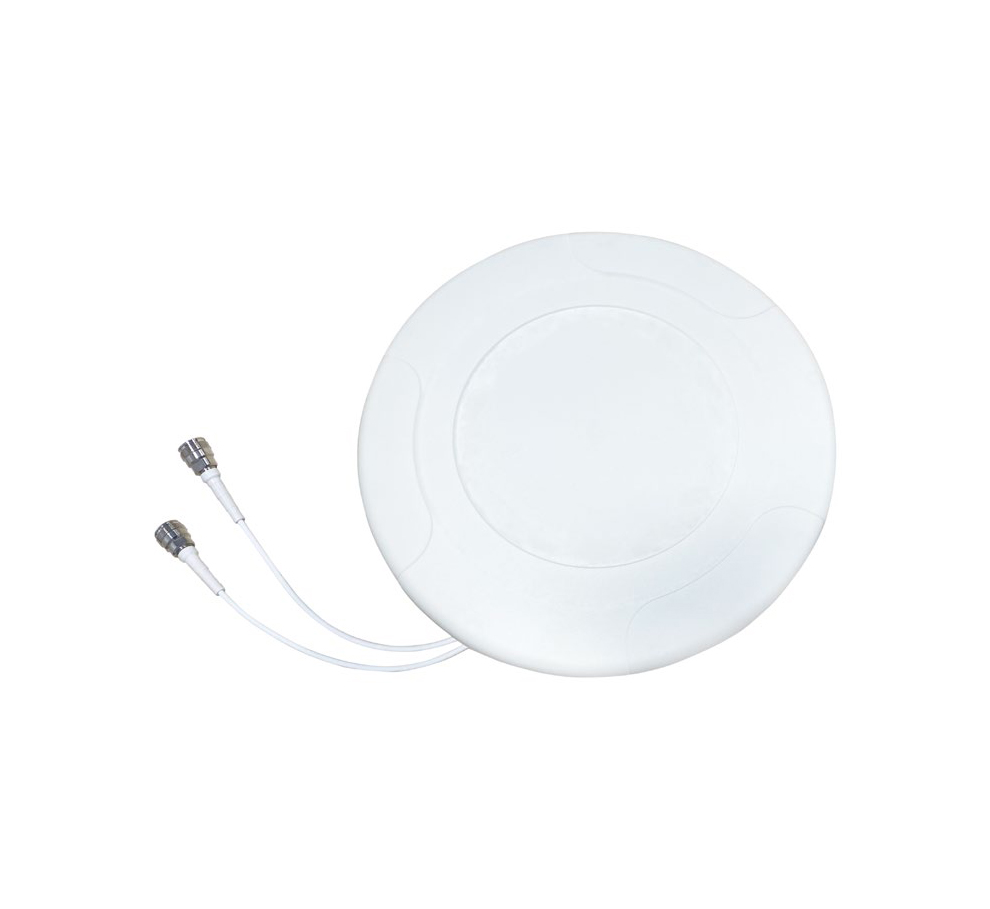
Ceiling Antennas
Ceiling DAS antennas are omnidirectional antennas mounted above or below a drop ceiling to distribute wireless signal evenly across an open floor area. Because they provide 360-degree horizontal coverage from a single mounting point, they are the standard choice for indoor DAS networks.
Most commercial ceiling DAS antennas support frequency ranges from 330 MHz to 6000 MHz. This wide bandwidth allows them to broadcast 4G LTE, 5G NR and legacy cellular signals simultaneously. For high-density 5G NR deployments, antenna manufacturers offer MIMO-capable models (2T2R and 4T4R) to increase data throughput.
Ceiling antennas provide optimal coverage in:
- Open-plan offices and enterprise buildings
- Retail showrooms and shopping centers
- Hospital wards and clinic spaces
- Airport terminals and transit concourses
- Hotel lobbies and conference rooms
When selecting a ceiling antenna, verify the frequency bands required by the local telecom carriers, the ceiling height (which dictates the effective coverage radius), and the connector interface needed to connect to the DAS remote unit.
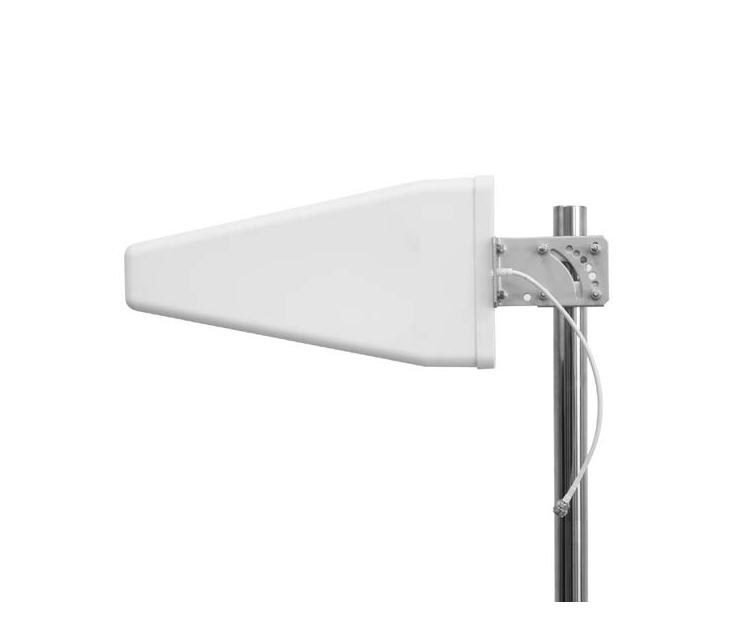
Log Periodic Antennas
Log-periodic DAS antennas (LPDA) are broadband directional antennas engineered to maintain consistent gain across a very wide frequency range. Within a DAS architecture, they primarily function as donor antennas to capture outdoor macro cell signals and feed them into the internal network. They are also used as high-gain directional feeds inside massive venues.
A standard log-periodic DAS antenna covers 617 to 6000 MHz or 698 to 6000 MHz, delivering 10 to 11 dBi of gain. This highly focused beam pattern is ideal when the RF signal source is in a fixed, known location.
Log-periodic antennas are typically deployed for:
- Donor antenna applications to pull outdoor signals into the DAS headend
- Extremely long indoor corridors or tunnels requiring efficient directional beams
- Large stadium or warehouse coverage where high-gain antennas reduce the total hardware count
- Multi-band projects that prefer one wideband unit over multiple narrowband antennas
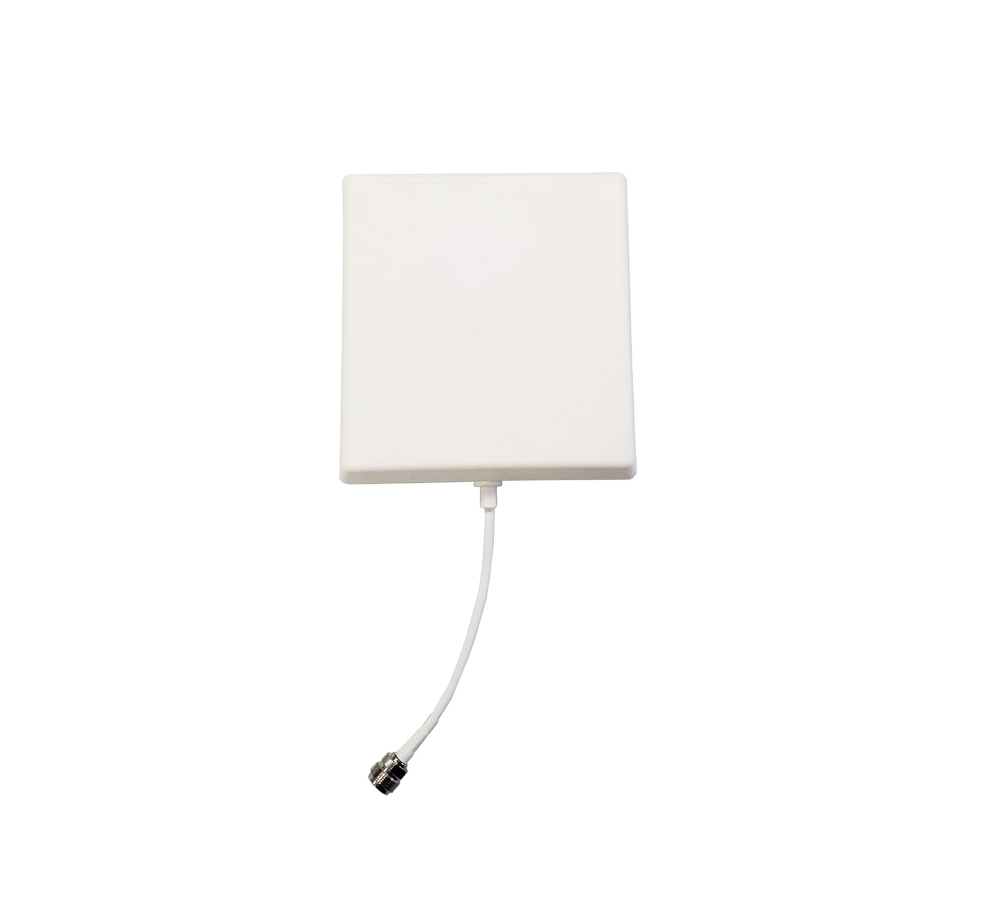
Wall Mount Antennas
Wall mount DAS antennas are directional units installed flat against a wall to project RF energy along specific paths, such as hallways, tunnels or narrow indoor corridors. Instead of radiating 360 degrees, their directional pattern concentrates the signal into a sector. This design achieves higher gain (typically 6 to 9 dBi) and pushes the coverage further down the corridor than an omnidirectional ceiling unit could.
Like ceiling models, wall mount antennas cover the 330 MHz to 6000 MHz spectrum. To support 5G capacity in corridors, system integrators often specify 4T4R MIMO wall mount antennas.
Wall mount antennas are the best choice for:
- Hallways, corridors and pedestrian walkways
- Multi-level parking structures and underground basements
- Stairwells and elevator shafts
- Manufacturing floors and distribution centers with high ceilings
- Underground subway and vehicle tunnels
How to Choose a DAS Antenna Type
| Factor | Ceiling Omni | Wall Mount Directional | Log-Periodic / LPDA |
|---|---|---|---|
| Coverage pattern | 360° horizontal | Sector / directional | Directional, narrow beam |
| Typical gain | 3-6 dBi | 6-9 dBi | 10-11 dBi |
| Primary use in DAS | Open floor areas | Corridors, tunnels | Donor antenna, long-range feed |
| MIMO support | 2T2R, 4T4R models | 4T4R models | Typically single-port |
| Mounting | Ceiling tile, surface | Wall bracket | Pole, wall or mast |
When planning a DAS layout, identify the open areas that require ceiling antennas, the corridors that need wall mount units, and the donor locations requiring log-periodic antennas. Then, ensure the selected models support the specific 4G and 5G bands required by the network carriers.
Sourcing DAS Antennas from a Manufacturer
Sourcing directly from an OEM DAS antenna manufacturer ensures that your project receives components built to exact RF tolerances. Factory-direct sourcing allows system integrators to secure the exact frequency bands, gain levels and connector types required without relying on off-the-shelf compromises. A single manufacturer can supply the ceiling, wall mount and LPDA units to keep hardware aesthetics and RF performance consistent across the entire building.
If a deployment has strict mechanical requirements, such as specialized mounting brackets or specific radome materials for fire compliance, a dedicated manufacturer can customize the antennas to fit the environment.