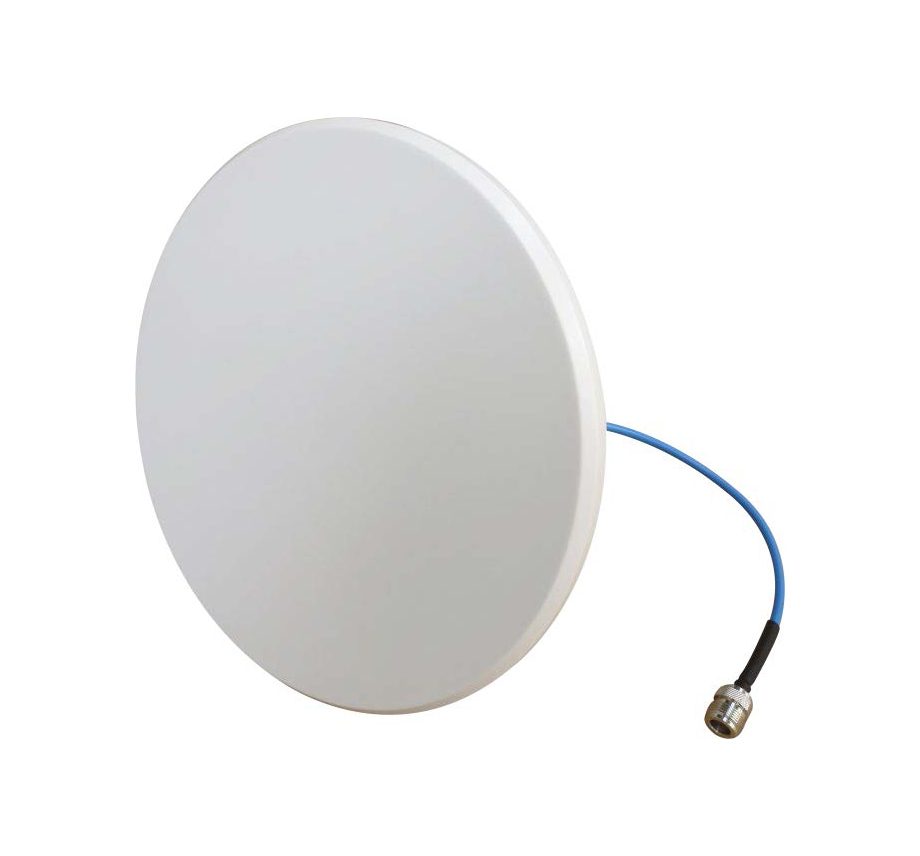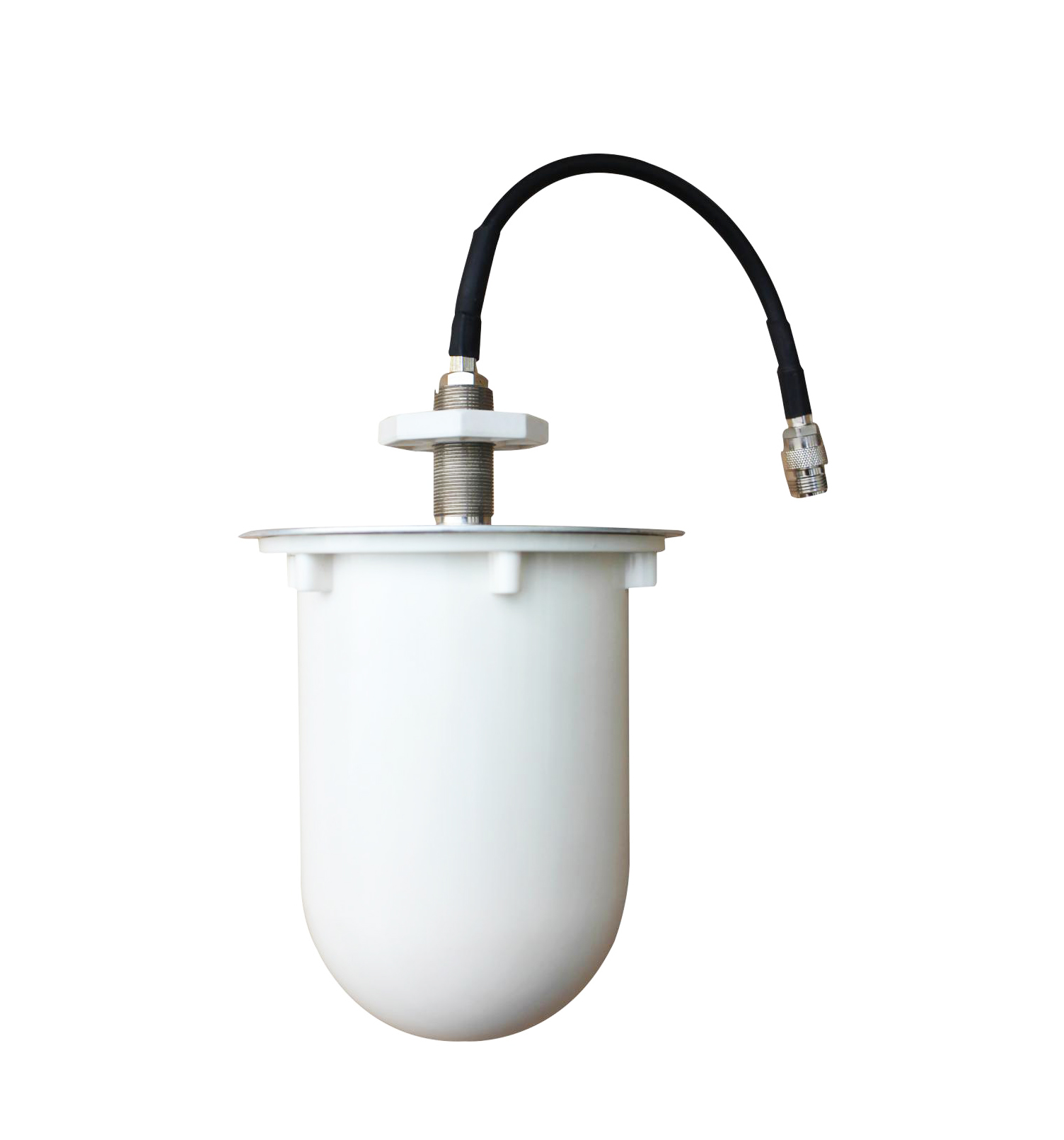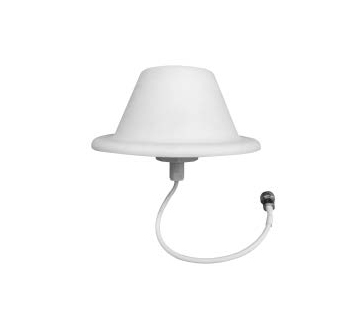



BBT ANTENNAS manufactures MIMO ceiling antennas covering 330 to 6000 MHz for 4G/5G DAS, WiFi, and public safety indoor coverage. The range includes single-port, 2T2R, and 4T4R MIMO configurations to match any in-building project. All models support OEM/ODM customization for frequency, port count, connector, and branding.
MIMO Ceiling Antenna Configuration Options
Choosing the right port count is the first step in ceiling antenna selection for any indoor coverage project.
Single-port ceiling antennas work well for standard DAS coverage in corridors, lobbies, and small offices where a single RF feed serves the area. They offer the simplest cabling and lowest cost per antenna point.
2T2R MIMO ceiling antennas double the data throughput by using two independent transmit and receive paths. They are the practical choice for medium-density commercial floors, conference areas, and hotel guest wings where LTE or 5G MIMO capacity matters but space and budget stay moderate.
4T4R MIMO ceiling antennas deliver full four-stream spatial multiplexing for the highest throughput per access point. High-traffic venues such as stadiums, convention centers, airports, and dense office towers benefit most from 4T4R architecture when the DAS headend supports four ports.
Frequency Coverage for Indoor Deployment
BBT ceiling antennas are available in wideband and multi-band configurations spanning 330 to 6000 MHz. Typical frequency groupings include:
Sub-1 GHz (330-960 MHz) covers public safety bands (TETRA, P25, LMR), low-band LTE (Band 71, Band 28, Band 8/5), and legacy cellular frequencies used in deep-indoor penetration scenarios.
Mid-band (1710-2700 MHz) covers the core 4G LTE and AWS bands that carry the bulk of commercial mobile traffic in most markets worldwide.
C-band and Sub-6 GHz (3300-6000 MHz) covers 5G NR n77/n78/n79 and WiFi 6/6E, supporting next-generation indoor capacity and high-speed wireless networking.
Multi-band models combine two or three of these ranges in a single radome, reducing installation points while covering the full 4G + 5G + WiFi spectrum in one ceiling antenna.
Application Scenarios
Commercial buildings and offices use ceiling antennas for floor-by-floor DAS and small-cell connectivity, eliminating coverage gaps that affect mobile users and IoT devices.
Transportation hubs such as airports, railway stations, high-speed rail coaches, and subway tunnels depend on ceiling-mount antennas for reliable passenger connectivity and operational communications.
Large venues including stadiums, convention centers, and exhibition halls require high-density MIMO ceiling antennas to serve thousands of simultaneous users without signal congestion.
Hospitality and healthcare facilities install ceiling antennas for consistent in-room coverage supporting guest connectivity, telemedicine, and asset tracking systems.
OEM, ODM, and Custom Ceiling Antennas
BBT ANTENNAS operates a 30,000-square-meter R&D and production facility with over 200 staff, including dedicated RF and microwave engineers. The company holds ISO9001:2015 and ISO14001:2015 certifications and applies four-stage quality control from raw materials through shipping inspection.
Customization options for ceiling antennas include adjusted frequency bands, port configurations, connector types (N-female, SMA, 4.3-10), radome color and branding, and mounting hardware. Both OEM (build to your drawing) and ODM (BBT designs to your spec) cooperation models are available, backed by over 30 years of antenna manufacturing experience. Learn more about BBT's custom antenna manufacturing capabilities.
Ceiling Antenna FAQ
What frequency bands do BBT ceiling antennas cover?
BBT ceiling antennas are available in configurations covering 330 to 6000 MHz. Models range from single-band (such as 1710-2700 MHz) to wideband multi-band (such as 617-960 / 1710-2700 / 3300-4200 / 4900-6000 MHz), supporting 4G LTE, 5G NR, WiFi 6/6E, public safety, and DAS deployments.
What is the difference between single-port, 2T2R, and 4T4R MIMO ceiling antennas?
Single-port ceiling antennas provide basic coverage with one RF feed. 2T2R models use two ports for MIMO operation, roughly doubling throughput compared to single-port. 4T4R models use four ports for full spatial multiplexing, delivering the highest capacity for dense indoor environments. Port count should match the DAS headend or small-cell radio capability.
Can BBT customize ceiling antennas for specific project requirements?
Yes. BBT supports OEM and ODM cooperation for ceiling antennas. Customizable parameters include frequency bands, port count, connector type, radome appearance, branding, and mounting hardware. The engineering team can provide a custom design proposal based on your project specifications.
What indoor environments are BBT ceiling antennas designed for?
BBT ceiling antennas are used in commercial offices, airports, railway stations, subway tunnels, stadiums, convention centers, hotels, hospitals, shopping malls, and industrial facilities. The low-profile ceiling-mount design integrates with standard suspended ceiling systems in most building types.
How do I request a quote for ceiling antennas?
Visit the contact page or email bbt@bbtantennas.com with your project frequency bands, required port count (single / 2T2R / 4T4R), connector preference, quantity, and any custom requirements. The BBT team typically responds within one business day.